Access can make or break a land deal in Taliaferro County. You might find the right acreage, the right price, and the right setting, only to learn that getting to the property is more complicated than it looks on a map. If you are buying or selling land here, understanding access and easements can help you avoid delays, financing issues, and resale problems. Let’s dive in.
Why access matters on Taliaferro acreage
Taliaferro County is a small rural county with 223 total county road miles and a 2020 population of 1,559. In a market like this, access is often parcel-specific, which means one tract may have clear county road frontage while the next depends on a private drive or recorded easement.
That is why access is more than a question of whether you can physically drive to the property. You also need to know whether you have a legal right to use that route, whether the right stays with the land, and who is responsible for maintenance.
The Georgia Department of Transportation county map is useful for screening, but it is not final proof of legal access. GDOT states that if the map conflicts with the official written road record, the written record controls.
Common access types in Taliaferro County
County road frontage
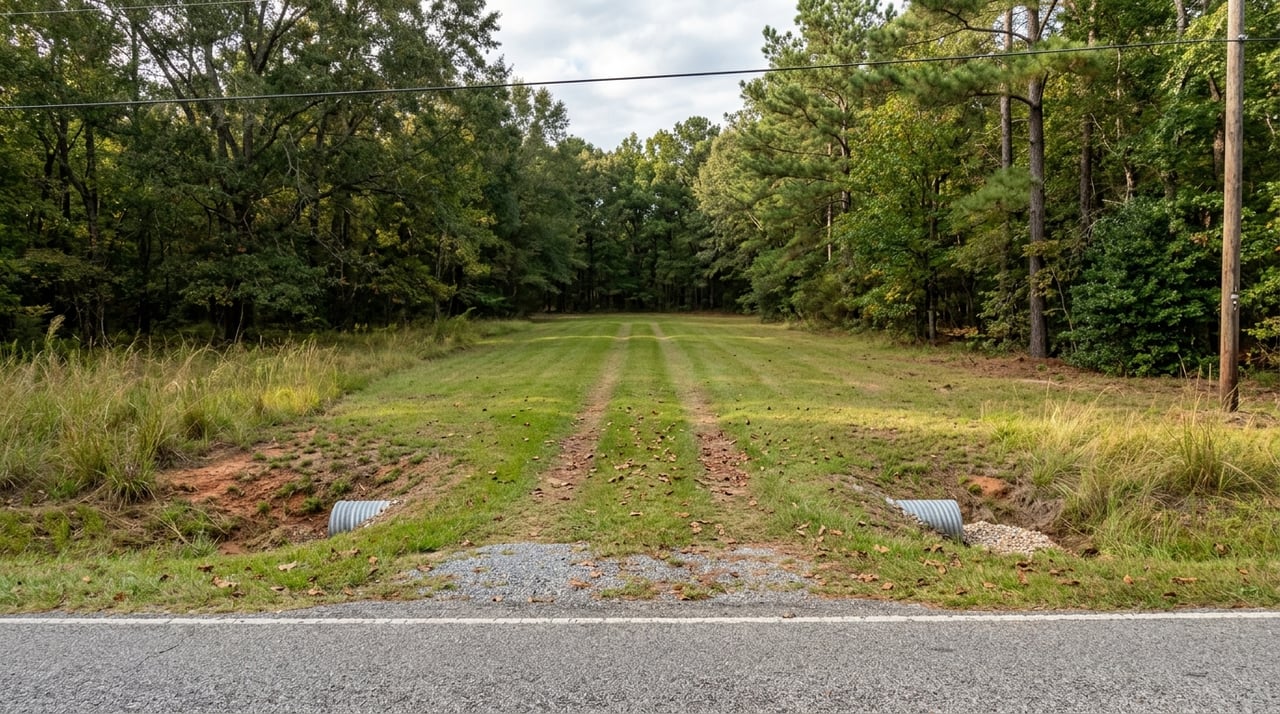
The cleanest setup is usually frontage on a public road that has been accepted by Taliaferro County or GDOT. The county’s subdivision rules require documentation showing that lots have access to and frontage on either a qualifying private road or an accepted public right-of-way.
For buyers, public frontage often means fewer moving parts. For sellers, it usually makes the property easier to explain, easier to market, and less dependent on private agreements with neighboring owners.
If the property connects to a state highway, GDOT approval is required before constructing entrances or exits. If the property connects to a county road, entrance and exit approval goes through the County Engineer.
Private roads and shared drives
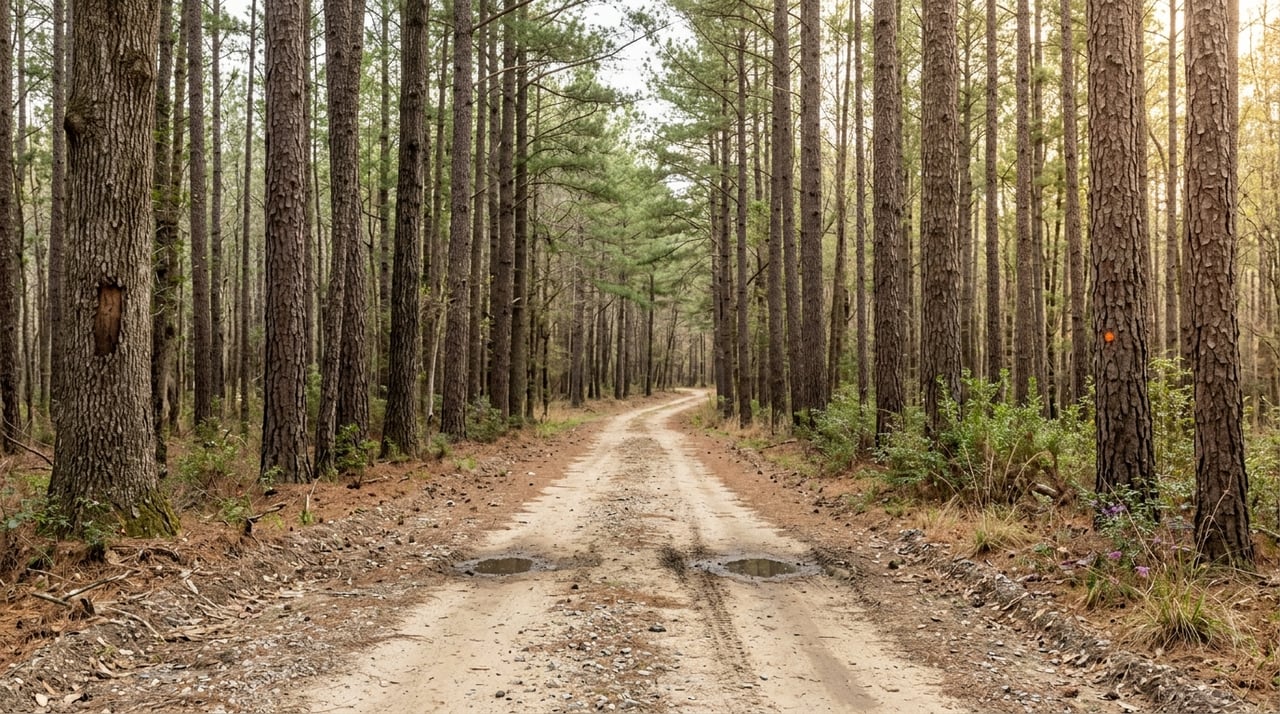
Many acreage tracts in Taliaferro County do not sit on straightforward public frontage. Some rely on private roads, shared driveways, or internal subdivision roads that look established on the ground but are still private from a legal and maintenance standpoint.
In those cases, the county requires a general-purpose public access and utility easement on the plat. That easement must be at least as wide as the right-of-way the County Engineer would require for a similar public street.
The county also makes an important point about maintenance. It does not maintain, repair, or improve private streets or related drainage improvements. Instead, a recorded private maintenance covenant must allocate expenses, remedies, and operating terms.
That means a private road is not just an access route. It is also a shared responsibility that should be clearly documented before closing.
Landlocked tracts and private ways
Some rural tracts appear reachable on aerials but are legally landlocked. Georgia law recognizes several ways a private way can arise, including express grant, prescription, implication of law, or compulsory purchase and sale through superior court.
Georgia law also states that prescriptive private ways can arise from seven years of uninterrupted use through improved lands or twenty years of use through wild lands. In some situations, superior court may grant a private way for a landlocked tract, but the court can deny the petition if the owner already has a reasonable alternate route.
Old access assumptions should be checked carefully. Easements can be lost by abandonment or nonuse if the facts support a presumption of release or abandonment.
Why a driveway is not enough
A visible driveway can create a false sense of certainty. Just because a path exists on the ground does not mean the legal paperwork is complete, current, or enforceable.
In Taliaferro County, a recorded plat alone does not prove the county accepted a road for public maintenance. The county’s rules make clear that filing a plat is not the same as county acceptance of streets or other public areas shown on that plat.
That distinction matters for both buyers and sellers. A route may look public, but if it is still private, the buyer needs to understand the easement rights and the maintenance burden before moving forward.
What buyers should confirm before closing
If you are buying acreage in Taliaferro County, your access file should be as clear as the boundary lines. That usually starts with a current survey or plat and the recorded documents that support the route to the property.
Here is a practical checklist to review before closing:
- Confirm whether the road is public, private, or shared
- Confirm whether the road has actually been accepted by the county or GDOT if it is presented as public
- Confirm that any easement reaches a public road
- Confirm the exact easement language, width, and endpoints
- Confirm who maintains the road surface, drainage, and any signage
- Confirm that the recorded documents match the driveway or road that exists on the ground
For private streets, county documentation standards also require a surveyor’s certification tied to the plat and deed-book and page references for the recorded maintenance covenant. That is one reason detailed file review matters so much on rural land.
What sellers should clean up before listing
If you are selling acreage, access problems are easier to solve before the property hits the market. A buyer who discovers unclear access late in the process may pause, renegotiate, or walk away.
The strongest listing file usually answers three questions right away: Is the access public or private? If private, where is the recorded easement? Who maintains the road? When those answers are easy to verify, your property is easier to market and easier for buyers to evaluate.
For tracts served by private roads, recorded maintenance terms matter. Taliaferro County requires those covenants to address costs, periodic maintenance, and enforcement, so buyers are not left guessing about future obligations.
How access affects financing
Access can directly affect whether a buyer can finance a property. USDA guidance for Single Family Housing Guaranteed Loans requires direct access from a public or private street, road, or driveway, and private roads or shared driveways must be backed by permanent recorded easements or maintenance arrangements documented in the lender’s file.
USDA also states that roads should be hard-surfaced or all-weather surfaced for that program. On rural acreage, that can become a major issue if the only route is informal, poorly maintained, or dependent on verbal neighbor permission.
In plain terms, documented access tends to support a smoother lending review. Informal access can narrow the buyer pool and create more friction during underwriting.
How access affects usability and resale
Access is not just a legal box to check. It affects how you use the land and how the next buyer will view it.
A tract with true public frontage is often simpler to own because maintenance responsibility is more straightforward. A tract served by a private road may still be a great property, but buyers will usually want to know who pays for repairs, how disputes are handled, and whether the road system is stable enough for future financing and resale.
That is especially important in a small rural county where parcel-level differences matter. Two properties with the same acreage can have very different marketability depending on whether access is public, private, shared, documented, or uncertain.
The safest next step on tricky access
If a tract has anything other than simple public frontage, attorney and surveyor review is usually the safest next step before marketing or closing. Access issues often turn on recorded instruments, survey geometry, and local approval rules.
That review can help confirm whether the access rights are permanent, whether the road location matches the documents, and whether maintenance obligations are clearly assigned. It can also help you spot problems early, when they are easier to address.
When you are dealing with Taliaferro County acreage, clear access is part of the property’s value. If you want help evaluating a tract, organizing due diligence, or preparing a cleaner listing file, reach out to Georgia Land Brokerage.
FAQs
What counts as legal access for acreage in Taliaferro County?
- Legal access usually means the property has documented frontage on an accepted public road or a recorded private access right, such as an easement, that connects the tract to a usable road.
Does a recorded plat prove a road is public in Taliaferro County?
- No. Taliaferro County states that filing a plat is not the same as county acceptance of streets or other public areas shown on that plat.
What should a buyer review for private road access in Taliaferro County?
- A buyer should review the current survey or plat, the recorded easement language, the easement width and endpoints, and any recorded maintenance covenant that explains who pays for upkeep and how disputes are handled.
Can a shared driveway affect financing on Taliaferro County land?
- Yes. USDA guidance says shared driveways need a permanent recorded ingress-and-egress easement, and lenders must document that access in the loan file.
What happens if a Taliaferro County tract is landlocked?
- Georgia law recognizes several ways a private way can arise, and in some cases superior court may grant a private way, but the facts and existing alternate routes matter.
Why should sellers address easement issues before listing Taliaferro County acreage?
- Cleaning up access questions early can reduce buyer hesitation, improve financing prospects, and make the property easier to market with a clear, decision-ready file.