Wondering whether the timber on a Taliaferro County tract is a real asset or just a nice view? That question can make a major difference in what you pay, how you plan the property, and what kind of long-term return you can expect. If you are buying land in this part of Georgia, understanding timber value helps you look past the listing photos and focus on what the tract can actually produce. Let’s break down what matters most.
Why timber matters in Taliaferro County
Taliaferro County has a strong forestry footprint. Georgia Forestry Commission county data show about 93,903 forest acres out of 125,100 total land acres, which is roughly 75% forest cover.
That matters because timber is not a side feature here. In many parts of the county, it is a core part of land value, along with access, topography, and future use.
The county describes Taliaferro as 197 square miles of rolling farmland, pastures, forests, and streams. It also notes that I-20, Highway 278, and the Augusta-Atlanta railroad cross the county, which means road frontage, haul routes, and general access can affect how marketable and harvestable a timber tract really is.
Start with a timber inventory
If you want to estimate timber value, the most important first step is an on-the-ground timber cruise or inventory by a consulting forester. UGA Extension guidance makes clear that a useful forest description should include species, stand age, stocking, average height, tree condition, health, topography, and even timber volumes and values.
In plain terms, you need more than a guess based on acreage. Two 100-acre tracts can look similar on a map and still have very different timber value depending on what is growing there and how it has been managed.
What a forester is looking for
A consulting forester will usually evaluate factors such as:
- Dominant tree species
- Stand age
- Whether the stand is planted or naturally regenerated
- Stocking levels
- Tree health and condition
- Topography
- Access points
- Estimated timber volume by product class
This kind of inventory gives you a working estimate, not a guarantee. Still, it is the best place to start if timber value is part of your purchase decision.
Stand age changes the numbers
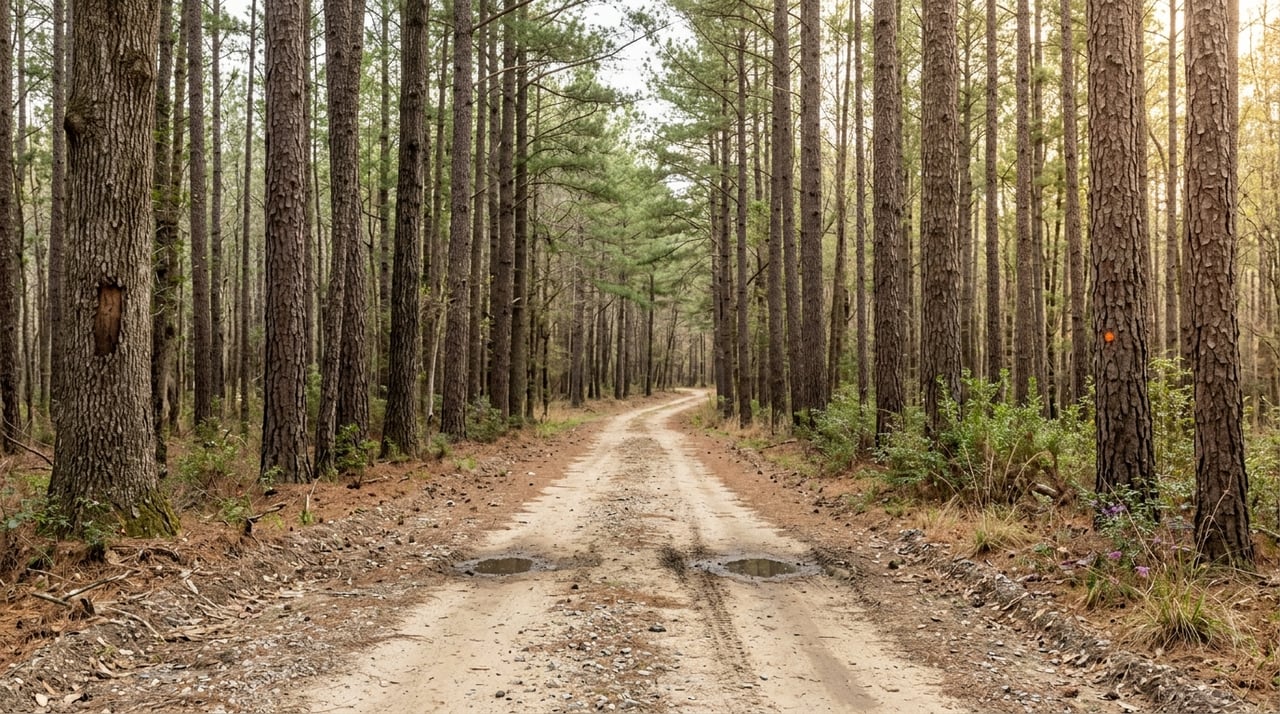
Stand age can heavily influence near-term value. UGA Extension notes that plantation forests are often more intensively managed, more productive per acre, and harvested sooner than naturally regenerated forests.
That means a planted pine stand with a known management history may offer a clearer income timeline than a mixed natural stand with little documentation. If a seller cannot show when the timber was established, whether it has been thinned, or how it has been managed, you should treat future cash flow assumptions carefully.
Ask these stand-history questions
Before you make an offer, ask:
- Was the timber planted or naturally regenerated?
- How old is the stand?
- Has it been thinned before?
- Are there records of management activities?
- Has any recent timber been cut from the property?
These answers can help you understand whether the tract may have near-term harvest potential or whether it is more of a long-range hold.
Species mix drives product value
Not all timber is priced the same. UGA Extension’s inventory guidance supports looking closely at species and timber volumes, and current market reporting separates products such as pine sawtimber, chip-n-saw, pulpwood, and hardwood classes.
That is why one tract with merchantable pine can perform very differently from another tract with mostly low-value pulpwood or mixed hardwood of uneven quality. Timber value is tied to what can actually be sold into the market, not just to how wooded the property appears.
Use market reports as context only
Regional price reports can help you frame expectations, but they should not replace a tract-specific estimate. TimberMart-South, through UGA Warnell, publishes market benchmarks used across the Southeast.
UGA’s 2026 timber outlook says South Georgia stumpage averaged a little over $17 per ton for pine chip-n-saw, more than $32 per ton for mixed hardwood sawtimber, and around $6 per ton for both pine and hardwood pulpwood. The same outlook expects statewide sawtimber prices to be mostly stable, while pulpwood remains under downward pressure.
Those numbers are useful for broad perspective, but they are regional averages, not a direct pricing formula for a tract in Taliaferro County. Your actual value depends on species, volumes, harvest timing, access, and local buyer interest.
Soils and site quality matter more than you think
A tract’s soils help determine how well trees can grow and what risks may affect management. UGA Extension says site index and soil conditions influence growth potential, and it points landowners to NRCS soil information because soils are one of the best ways to judge forest productivity and susceptibility to pests or disease.
NRCS also notes that soil surveys help evaluate tree suitability, tree-crop potential, flooding hazards, water-table depth, slope, and restrictive layers. For a buyer, this matters because a tract with better soils may support stronger long-term growth than a tract with wetter or more limited ground.
What to check on soils maps
Before buying, review soil information for:
- Flood-prone areas
- Seasonal wetness
- Steep slopes
- Restrictive layers
- Suitability for commercial tree growth
This step can help you separate a tract with solid timber potential from one that looks good from the road but has weaker long-term productivity.
Access can raise or reduce net timber value
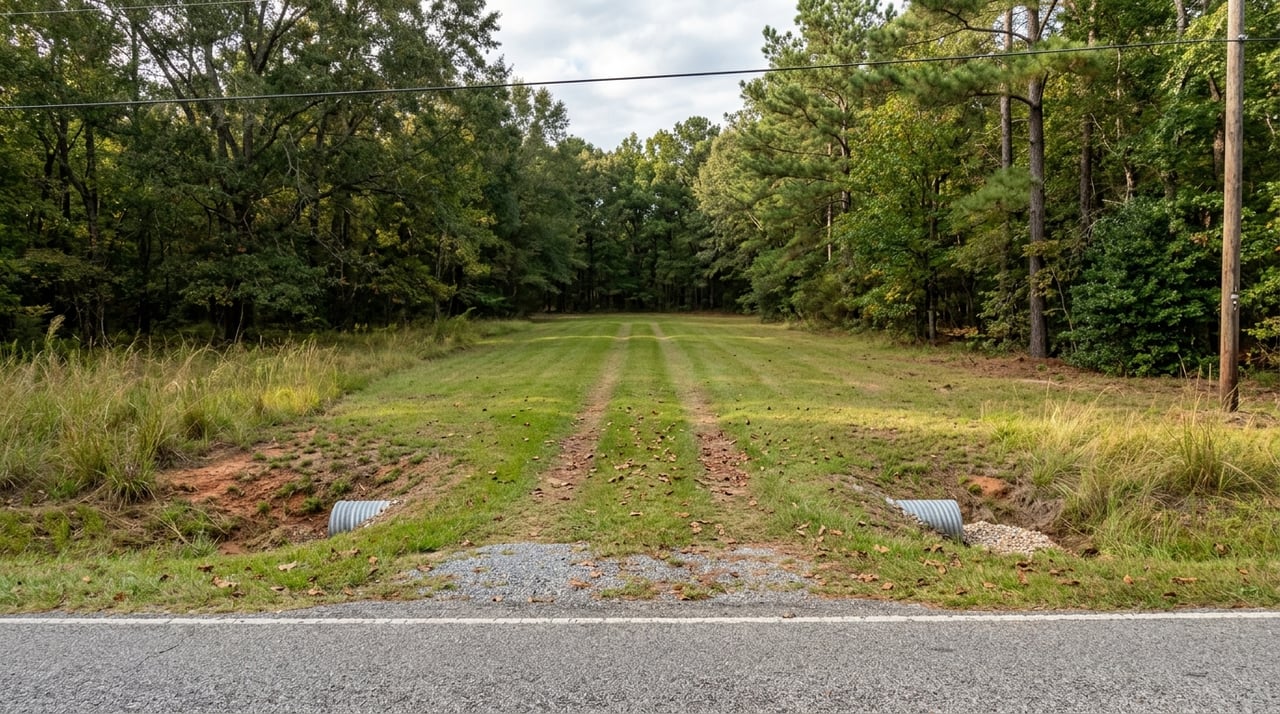
Access is one of the most overlooked parts of timber valuation. Georgia Forestry Commission guidance stresses that access roads are essential to forest management, and that stream crossings are the most critical road-system component from a water-quality standpoint.
That means a tract can have strong standing timber volume and still produce lower net proceeds if logging access is difficult or expensive. Poor roads, wet areas, steep terrain, or crossing work can all cut into what the timber is worth in practice.
Access factors to review
Pay close attention to:
- Public road frontage
- Internal road condition
- Ingress and egress points
- Stream crossings
- Soil movement and erosion risk
- Seasonal harvest limitations
In a county crossed by major transportation routes like I-20 and Highway 278, practical haul access is part of the value story. A well-located tract with workable roads may be more attractive than a similar stand with tougher harvest logistics.
Public records to review before you buy
Timber value is not just about trees. It is also about the paperwork tied to the property.
The Georgia Superior Court Clerks’ Cooperative Authority provides statewide access to deed, lien, and plat dockets, making it a key source for checking recorded deed history and plats. If you are counting on access, boundaries, or clean title, this is one of the first places to verify what is actually on record.
Key records to check
Before you assume a tract is straightforward, review:
- Deed history
- Recorded plats
- Liens
- Tax assessment records
- Soil maps
These records can reveal access issues, ownership questions, or property details that affect what the land is worth to you.
Check tax status and assessment details
Taliaferro County’s assessor page says the office is regulated by the Georgia Department of Revenue and the Georgia Department of Audits, and it notes the county completed a 2025 county-wide revaluation for residential and agricultural properties.
That makes the county assessor and tax commissioner useful contacts for verifying current tax bills, assessment status, and whether any preferential assessment may already apply to the tract.
The Georgia Department of Revenue also says standing timber is not taxed until it is sold or harvested, at which point it is taxed at 100% of fair market value. It also says Georgia property is generally assessed at 40% of fair market value unless a special assessment applies.
Ask about special assessment programs
Georgia Department of Revenue materials identify conservation-use and forest-land programs that may reduce assessment when land remains in qualifying timber use. Because program rules differ, buyers should confirm current eligibility, acreage limits, and filing deadlines with the Taliaferro County Board of Tax Assessors before assuming a lower tax bill.
Build the right due diligence team
If timber value is a meaningful part of the purchase, do not try to evaluate everything alone. Georgia Forestry Commission says private landowners seeking advice on timber sales should contact a registered consulting forester, and UGA Extension recommends professional help when preparing a management plan or evaluating a forest tract.
In many transactions, the practical team looks like this:
- Consulting forester for cruise, stand data, and value estimates
- Title professional or attorney if deed, plat, or easement questions appear
- CPA or tax advisor if you are reviewing conservation-use or forest-land treatment
That team can help you move from assumptions to verified information.
A simple way to evaluate timber value
If you want a practical buying framework, use this sequence:
- Review aerials, boundaries, and basic tract layout.
- Check deed history, plats, and recorded access through county records.
- Review soils and topography for growth potential and harvest limits.
- Order a forester’s timber inventory.
- Compare the estimated product mix to current regional market benchmarks.
- Factor in roads, stream crossings, and haul logistics.
- Confirm tax status and any special assessment details.
This process will not remove every risk, but it gives you a much clearer picture of whether the asking price reflects the tract’s timber potential.
The bottom line for Taliaferro County buyers
In Taliaferro County, timber can be a real value driver, but only when you evaluate it on the ground and in context. Forest cover is widespread, yet not every wooded tract offers the same income potential, management flexibility, or harvestability.
The best approach is simple: verify the stand, verify the access, verify the soils, and verify the records. If you do that before you buy, you will be in a much stronger position to judge whether the land fits your goals.
If you want help sorting through a timberland purchase in Taliaferro County, Georgia Land Brokerage can help coordinate the land-focused due diligence that matters most.
FAQs
How do you estimate timber value on Taliaferro County land?
- Start with a consulting forester’s timber cruise or inventory, then compare the species and product mix to current regional stumpage benchmarks to form a tract-specific estimate.
What records matter most when buying timberland in Taliaferro County?
- The most important public records are deeds, plats, liens, tax assessment records, and soil maps.
What site issues can lower timber value on Taliaferro County property?
- Poor road access, difficult stream crossings, wet or erosive soils, and stands that are overcrowded, over-mature, or poorly stocked can reduce net timber proceeds.
Does timber get taxed every year in Georgia?
- According to the Georgia Department of Revenue, standing timber is not taxed until it is sold or harvested, when it is taxed at 100% of fair market value.
Can a Taliaferro County timber tract qualify for lower property taxes?
- Some tracts may qualify for conservation-use or forest-land treatment, but you should verify eligibility, acreage rules, and filing deadlines with the Taliaferro County Board of Tax Assessors.
Why does access matter so much for timberland in Taliaferro County?
- Access affects whether timber can be harvested efficiently, how equipment reaches the tract, and whether road or stream-crossing work may reduce net value.