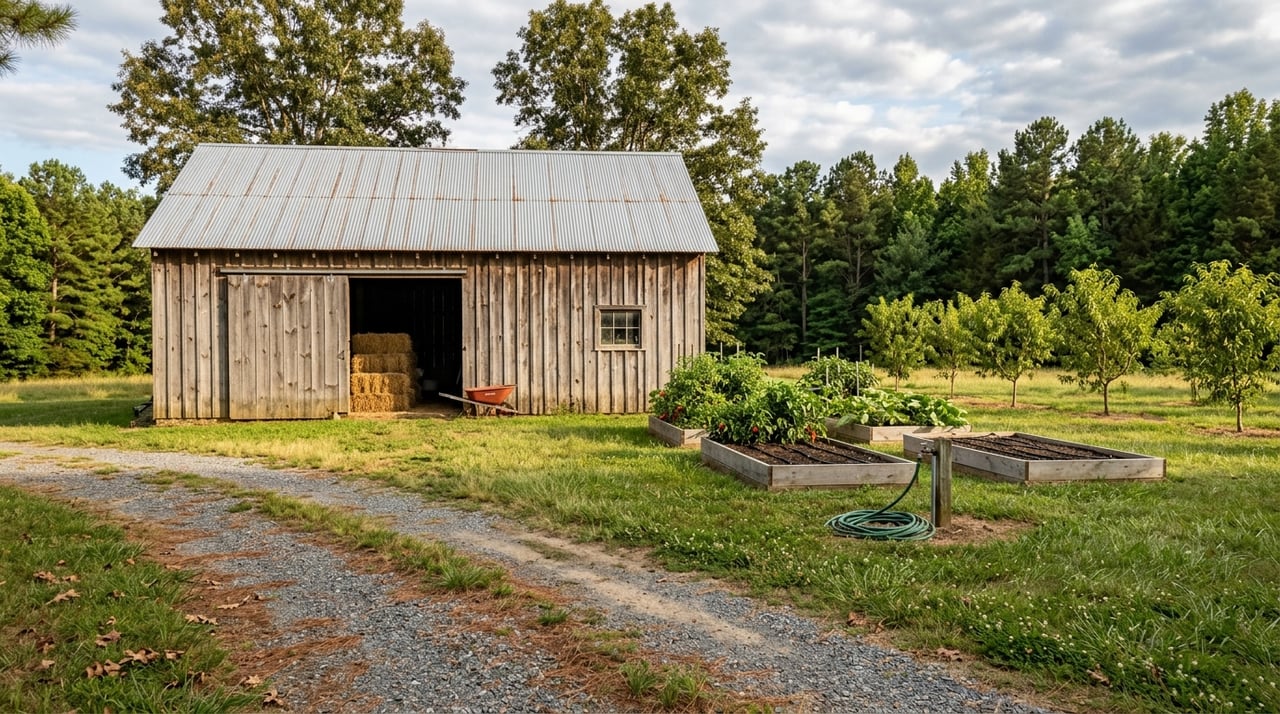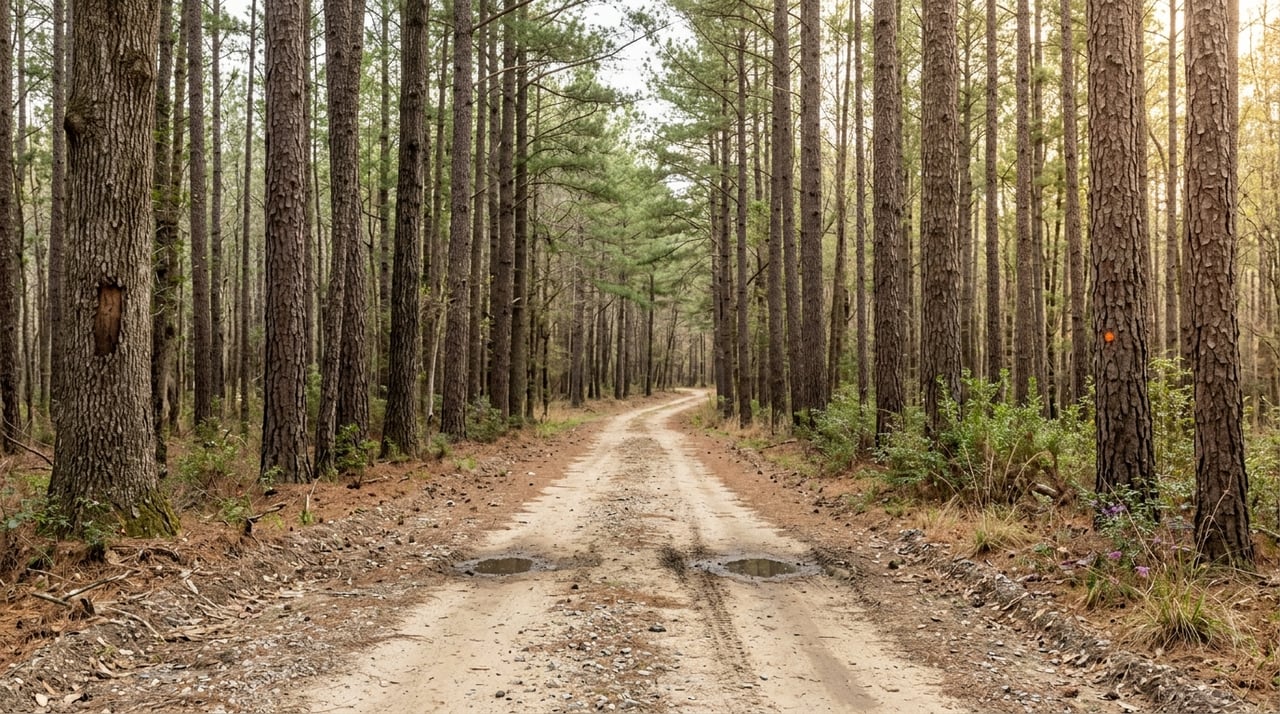
If you have ever stood on a beautiful piece of raw land and wondered, Can I actually build here?, you are not alone. In Elbert County, turning vacant acreage into a homesite can be very doable, but the process depends on zoning, access, septic, utilities, and the order you tackle each step. This guide walks you through what to check first, what can slow you down, and how to plan a buildable homesite with fewer surprises. Let’s dive in.
Start With County Rules
Before you clear trees or sketch a house plan, confirm what county rules apply to the parcel. Elbert County administers zoning, planning, and code enforcement through its Code Enforcement / Planning & Zoning office, and the county zoning ordinance includes districts such as R-1, R-2, RR, GB, IND, and A.
For raw land, zoning is one of the first practical filters because it shapes what can happen on that tract. If the parcel's use is unclear, the county keeps the official zoning map in the clerk's office, so it is smart to verify the district before making layout decisions.
A good first call is the Elbert County Code Enforcement / Planning & Zoning office at 45 Forest Ave. in Elberton, 706-213-1000. The county lists Meagan Booth and Destin Coley as contacts on that page.
Check the Land Before Clearing
A homesite starts with the ground itself, not just the deed. Elbert County land-use rules caution against residential use on land with flooding, poor drainage, erosion, or other topographic problems unless those issues are corrected.
That means your first walk of the property matters. You want to look at the terrain, identify a likely house-pad area, and think through how a driveway, septic system, well, and any outbuildings might fit together.
The county building permit application makes this planning step even more important. It requires a site plan on a single 8.5 x 11 sheet showing the house, driveway, septic system, well, and other structures, so it makes sense to do layout work before heavy clearing starts.
Verify Boundaries and Access
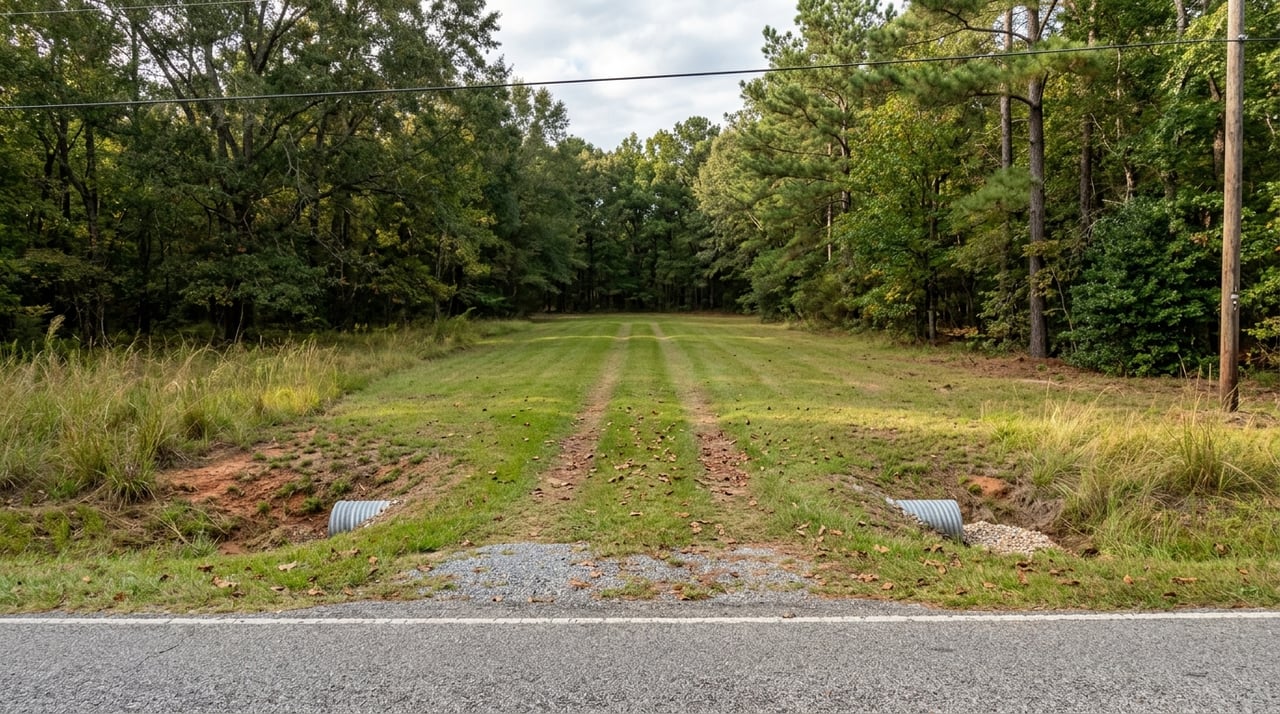
Raw land can look simple from the road, but access issues can create costly rework later. A practical homesite plan usually begins with boundary verification and a clear understanding of how you will enter the property.
If the parcel fronts a state or federal highway, driveway access is not something to assume. Elbert County's ordinance says access from that highway is subject to Georgia DOT approval, and GDOT handles driveway and encroachment permits through its access-management program.
Driveway placement also ties into official addressing. Elbert County has a 911 Address / Driveway Application, and county code says property owners must install and maintain an address display at the primary entrance driveway.
Put Septic Feasibility Near the Top
For many raw tracts, septic is the real make-or-break item. If the site cannot support a workable septic layout, the best-looking house spot may not be usable.
Elbert County's building permit application says a septic tank permit from the Health Department is required, and it notes a typical issuance window of 7 to 10 days. Just as important, the building application requires a septic permit number before the building permit will be processed.
This is why septic should be checked early, not after clearing or grading. The Elbert County Health Department / Environmental Health office at 618 Jones Street in Elberton, 706-283-3453, is the local point of contact.
Septic setbacks shape the layout
The county building application lists several septic absorption-field setbacks that can change where the home, well, and driveway should go. Those setbacks include:
- 100 feet from wells, springs, and sinkholes
- 50 feet from streams, ponds, and wetlands
- More than 10 feet from water lines and basements
- More than 5 feet from other structures, driveways, and property lines
These numbers are a big reason to plan the entire homesite together. A driveway or house pad placed too early can create problems for the septic field later.
Coordinate Well and Septic Together
On raw land, well placement and septic placement should work as one plan. Georgia's Well Water program says private well issues are handled through local environmental health offices and the state's non-public well program.
In practical terms, that means you should not treat the well as a last-minute utility item. The location of the well and the septic system need to be coordinated from the start so your layout still works once setbacks are applied.
Confirm Utility Availability Early
One of the most common mistakes on rural land is assuming utilities are available because you see service nearby. In Elbert County, utility access is parcel-specific.
Elberton Utilities says its Water Division serves the city and some areas just outside city limits in unincorporated Elbert County, and its Waste Water Division serves more than 2,500 locations. Some sites may have access to public water or sewer, while others will need private systems.
Electric service also needs to be confirmed, not guessed. Georgia's electric system is territorial, and the Georgia Public Service Commission notes that service may be provided by Georgia Power, an EMC, or a municipal system depending on the area.
Utilities can drive your timeline
If public water or sewer is available, that may affect where you place the home and driveway. If not, you will likely be coordinating private well and septic placement instead.
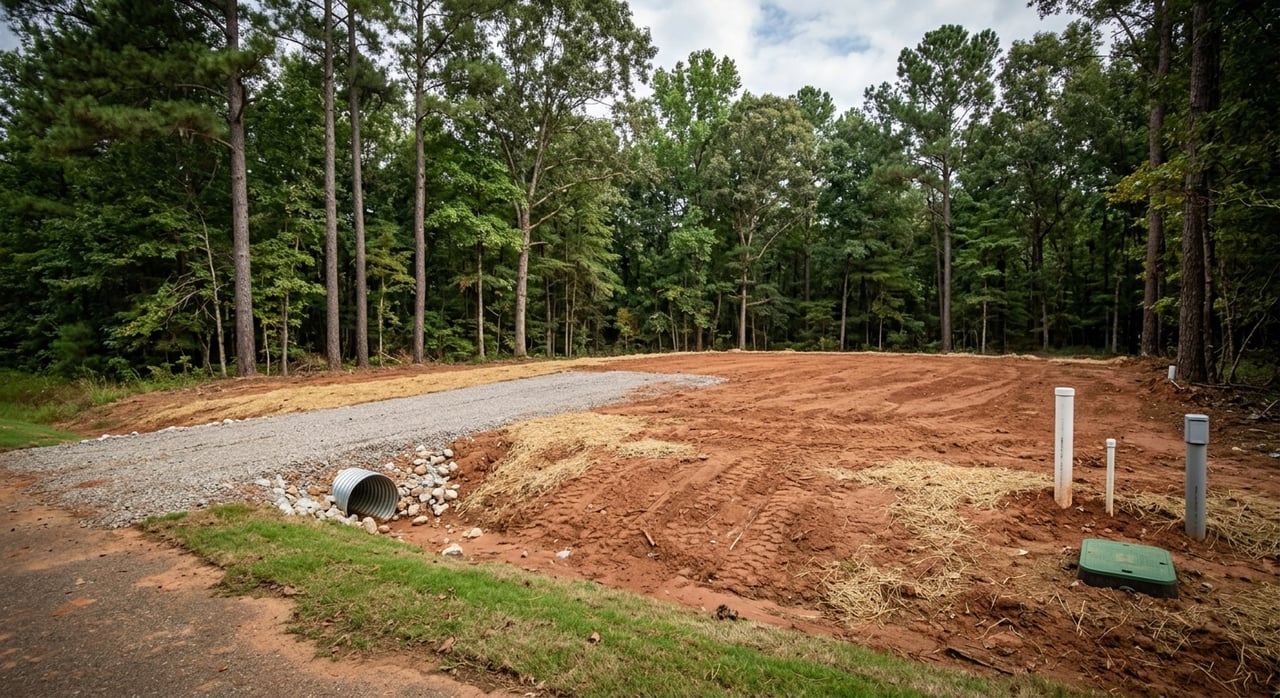
Either way, utility research belongs near the front of the process. It is much easier to adjust a paper layout than to redo clearing, grading, or driveway work later.
Understand Clearing and Land Disturbance
Clearing raw land is often where people want to start, but permits can affect that decision. Elbert County's land disturbance application asks for the map and parcel number, acreage, zoning classification, contractor information, and a site plan.
The county says land disturbance permits must be approved before the permit is issued, and the fee is $40 per acre plus $4 per tenth of an acre. The county code also exempts some single-family residences that disturb less than one acre and are not part of a larger common plan of development or sale, but that is a narrow exemption that should be confirmed with the county for the specific parcel.
If your project also involves commercial timber harvest, the county planning page points to the Georgia Forestry Commission's timber-harvest notification system. If clearing includes prescribed burning or land-clearing burns, the Georgia Forestry Commission's burn-permit system is the relevant state contact.
Do Not Dig Before Utility Locates
Before any mechanized digging begins, Georgia law requires a Georgia 811 locate request. Georgia 811 says excavators must call 811 or 1-800-282-7411 at least 48 hours and no more than 10 working days before digging so utilities can be marked.
Even on rural land, this step matters. It helps protect existing lines and keeps your project moving without avoidable damage or delay.
Follow a Practical Order
When you are trying to turn raw Elbert County land into a homesite, sequence matters. The smoothest projects usually follow a clear order based on county permits, health review, and utility coordination.
A practical sequence looks like this:
- Confirm zoning, boundaries, and road access
- Walk the site and choose a likely house-pad area
- Check septic and well feasibility with Environmental Health
- Confirm utility availability
- Complete driveway and access approvals if needed
- Obtain any land-disturbance, timber, or burn-related approvals
- Apply for the building permit once the site plan is aligned
This order can help you avoid spending money in the wrong place first. It also reduces the risk that a septic issue, driveway approval, or utility limitation forces you to redesign the whole homesite.
Why Early Planning Saves Money
On rural acreage, the most expensive mistakes often come from doing the right work in the wrong order. Clearing a driveway too soon, picking a house pad before checking septic setbacks, or assuming public utilities are available can all lead to rework.
A strong plan starts with county verification and site feasibility. Once the parcel's zoning, access, septic, well, and utility picture are clear, you can move forward with more confidence and far fewer surprises.
If you are evaluating raw acreage in Elbert County, it helps to work with a land-focused team that understands how parcel-level due diligence fits together. For help reviewing Georgia land opportunities and next steps, reach out to Georgia Land Brokerage.
FAQs
What should you check first before building on raw land in Elbert County?
- Start by confirming the parcel's zoning, boundaries, and road access with Elbert County Code Enforcement / Planning & Zoning.
Why is septic so important for an Elbert County homesite?
- A septic permit is required before the county will process a building permit, and septic setbacks can significantly affect where you place the house, driveway, and well.
Can every Elbert County land parcel get public water or sewer?
- No. Utility availability is parcel-specific, and some sites may have access to Elberton Utilities while others will need private well and septic systems.
Do you need approval for a driveway on Elbert County land?
- Yes, in some cases. If the parcel fronts a state or federal highway, driveway access is subject to Georgia DOT approval, and the county also uses a 911 Address / Driveway Application process.
When do you need a land disturbance permit in Elbert County?
- It depends on the scope of the project. Elbert County requires review of land disturbance permits, although some narrow single-family exemptions may apply for disturbances under one acre if the project is not part of a larger common plan.
When should you contact Georgia 811 for an Elbert County homesite project?
- Before any mechanized digging. Georgia 811 says the locate request must be made at least 48 hours and no more than 10 working days before excavation begins.