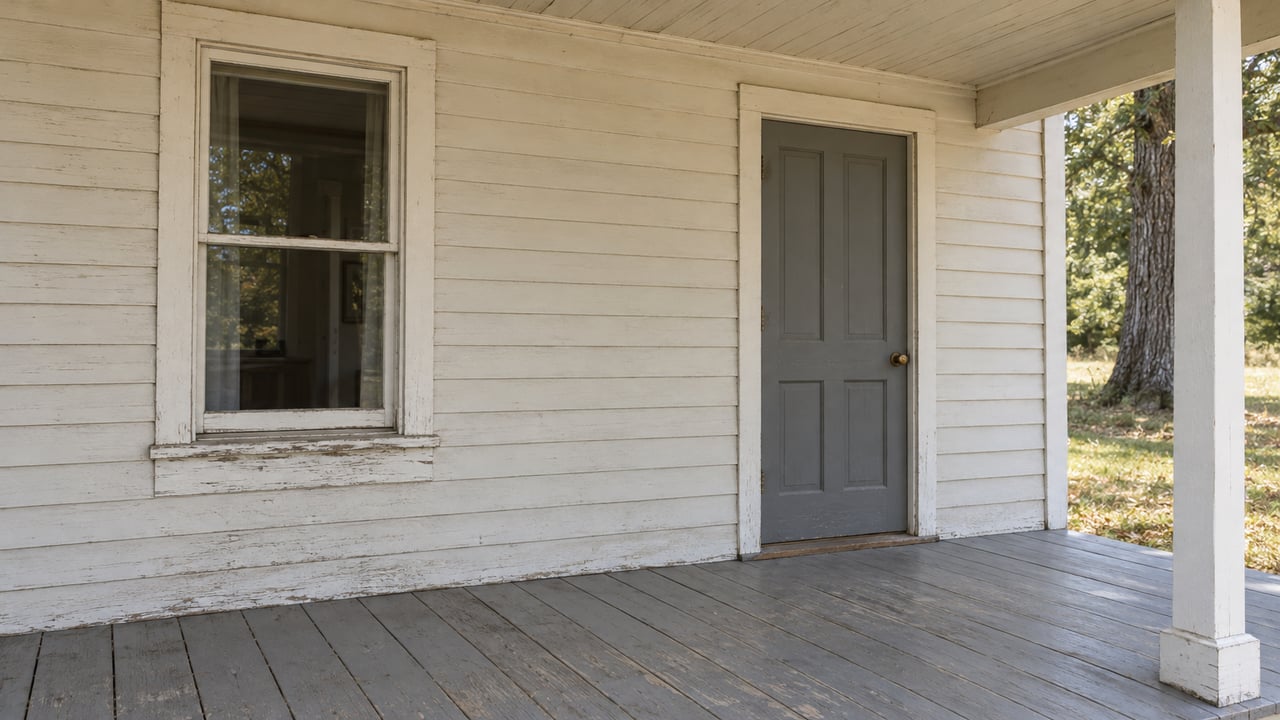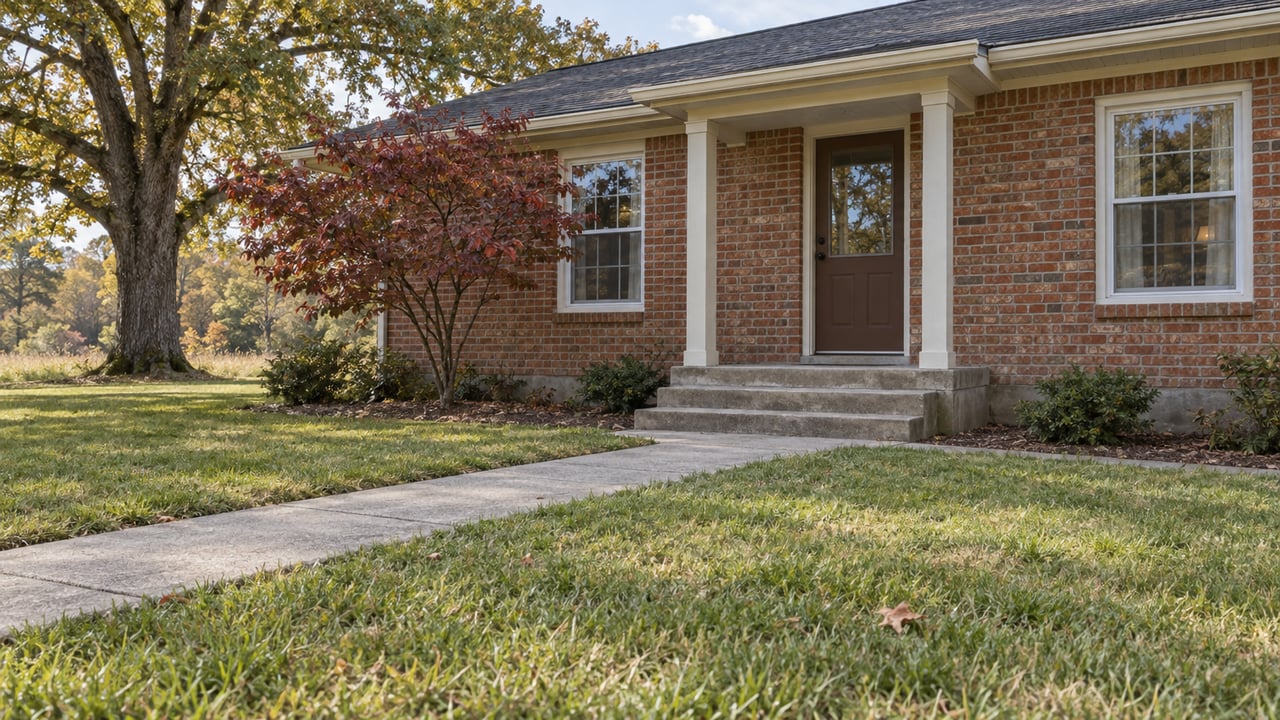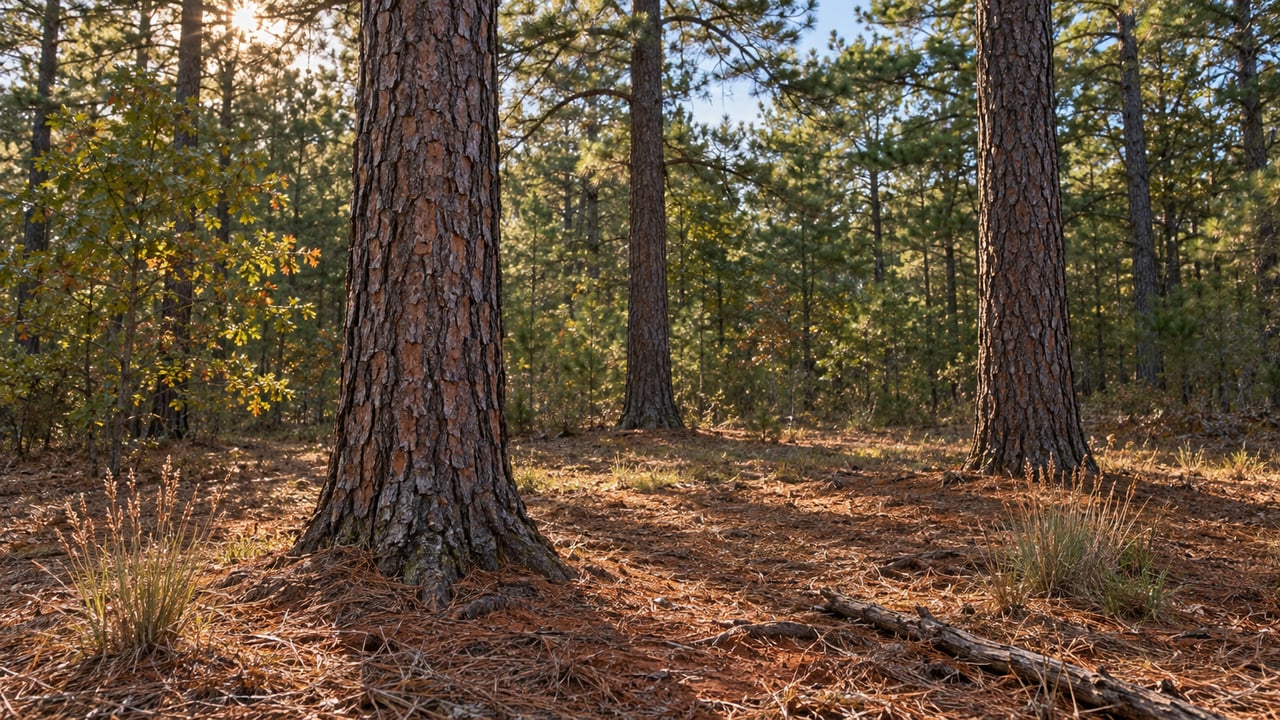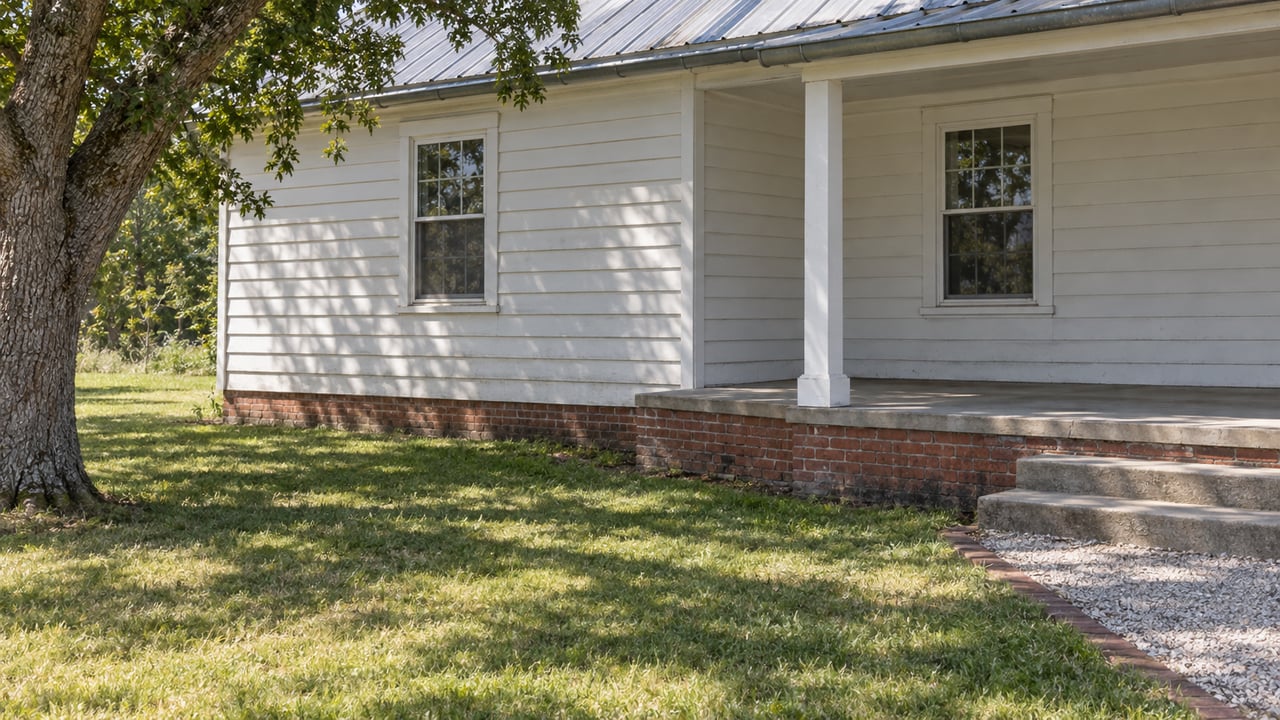
The 207.32-acre tract has open fields, pine stands, a pond and granite outcrops on its north end. Its owners bought it in January 2007 for $429,875, ran a pit quarry on it from 2010 to 2012, and then shut the quarry down and sold the equipment. In 2017 they put a conservation easement on the land and valued that easement at $10,234,108, on the theory that the tract's highest and best use was an active granite mine.
In a case filed November 3, 2025, the U.S. Tax Court valued the easement at $612,000. The court's before-easement value for the whole tract was $985,000.
For anyone buying or selling acreage in Elbert County, the case is a detailed public record of how a granite tract gets priced. Granite under the land is common here. What's scarce is proof that the stone can be sold, and an operator able to pay for it.
The Deposit Is Big. Good Stone Is Patchy.
The Elberton granite deposit runs more than 35 miles long, 6 miles wide and 2 to 3 miles deep, through parts of Elbert, Oglethorpe and Madison counties. The court found that many Elbert County farms and home lots have visible granite. It also found that stone quality changes across the deposit, and that the deposit does not cover the whole county.
Drilling on the tract shows how uneven the stone can be on a single property. A 2017 program drilled three boreholes, all on the north end of the tract:
- Borehole 1: mostly uniform gray granite from about 14 to 94 feet, which could be sold as Georgia Gray.
- Borehole 2: brown and broken granite on and off down to 80 feet, then gneiss.
- Borehole 3: a 10- to 12-foot band of brown granite near the surface. Drilling stopped at 35 feet.
So one hole out of three showed marketable stone. The waste pile from the 2010–2012 operation held blocks with veins, off-color granite, odd sizes and gneiss contact, which are the flaws that keep stone out of the dimension-stone market. The operating company reported losses of $175,532 in 2011 and $189,752 in 2012.
A Quarry Tract Needs a Buyer Who Can Sell the Stone
Elberton's Georgia Gray goes mostly to the memorial industry, because its color, hardness and uniformity suit headstones and monuments. That makes the people who buy quarry land a short list.
When the Sterling Gray Quarry came up for sale in 2014, the court found the eventual buyer ran one of only three companies in Elberton with enough fabrication demand to support the purchase. Since then the fabrication side has consolidated further. Matthews International bought the relevant divisions of Star Granite in 2018 for about $41.2 million, and it bought Eagle Granite in 2023 for an initial $18.1 million. Matthews still reported Memorialization as a business segment in its August 2026 results.
The buyers who have arrived recently brought their own sales channels with them:
- Polycor Georgia Granite Quarries took over operations at the Keystone, Danburg 1, Danburg 2–3, Greene County and Blue Ridge quarries, according to the Elberton Granite Association's Summer 2024 issue.
- Williams Stone Company of East Otis, Massachusetts, bought McCannon Granite and Crystal Blue Quarries effective January 2023. Its link to Elberton goes back to 1985, when it began trucking curbing slabs north.
The Tax Court made this point directly when the taxpayer cited Williams Stone as proof that a newcomer could succeed. Williams came in with an established fabrication plant and access to the New England market. The court found no credible evidence that a quarry on the Bowman Highway tract would have had either.
The court also expected established producers to defend their market share if a new quarry started gaining ground. A tract's quarry value depends on whether one of a handful of operators wants it, and on what that operator would give up to bring it into production.
What a Working Quarry Tract Actually Pays
When a deal does come together, the record shows what it looks like. Sterling Gray is a 159-acre pit quarry in Elbert County that dates to the 1930s. It was leased in 2014 with an option to buy:
| Term | Sterling Gray lease, 2014 |
|---|---|
| Option price | $1.4 million |
| Royalty, gray granite | $1 per cubic foot sold |
| Royalty, curbing | 33 cents per cubic foot |
| Minimum royalty | $36,000 per year |
| Credit toward purchase | Every royalty dollar |
| Option exercised | February 2019, for $1,172,367 |
Royalties over five years came to $227,633. In 2019 the buyer also bought an adjacent 46 acres for $120,000. That was an established quarry with seven decades of history, and it sold for about $1.2 million on 159 acres.
Its output after the purchase shows what demand did:
| Year | Production (cu ft) | Net income |
|---|---|---|
| 2019 | 67,468 | $208,585 |
| 2021 | 106,915 | $489,504 |
| 2023 | 171,726 | $1,225,579 |
The court tied the market change to 2021. That year, buyers in the Northeast found it cheaper to quarry curbing stone in Georgia and ship it north than to quarry it locally, which raised demand and prices for Elberton granite. The larger lease on record is from 2024. Three quarries totaling a little over 200 acres, Greene County, Blue Ridge and Danburg 2, were leased to Polycor at a 10% royalty on gross sales with a $50,000 monthly minimum. That minimum was set from about $6 million in sales the year before.
Both deals involved quarries with production histories. The Polycor minimum was set from actual sales, not projected tonnage.
The Proof Ladder Behind Every Quarry Price
The court used the Society for Mining, Metallurgy and Exploration framework to measure how much was actually known about the stone. A tract moves up these levels as evidence builds up:
- Exploration results: the least certain category, such as visible outcrops and early samples.
- Inferred, indicated, then measured resources: what is in the ground, with rising geological confidence.
- Probable, then proven reserves: stone that can be extracted at a profit once economic, legal and environmental factors are counted.
A scoping study checks whether more work is worth doing. A prefeasibility or feasibility study is what turns a resource into a reserve.
The tract never got past the lower levels. The court set its highest and best use as "potential mining following more extensive drilling/testing, the creation of a mine plan, and completion of a market feasibility study." The court said that use still carries value, because a buyer would pay for the option to explore whether the granite could be profitable. A buyer just would not pay as if that question were already answered.
The taxpayer's experts assumed 75% and 80% of mined stone would be salable. The court found that the high recovery figures cited from working quarries reflected survivorship bias, and that for this site there was no reliable support even for 50%. Their volume projections ran 10% to 22% of Georgia's entire dimension-granite output. The U.S. Geological Survey put that output at 121,000 metric tons in 2017.
Beaverdam Creek Holdings v. Commissioner, decided June 2, 2025, shows what happens one level higher. That tract is 85 acres in Oglethorpe County, about 10 miles southwest of Elberton. It was quarried from the 1950s until 2012 and zoned Heavy Industry-Mineral Extraction. The court did accept quarrying as the highest and best use there, but it still valued the land with comparable sales instead of projected quarry income. The claimed $21,972,000 deduction became $193,250, based on a $300,000 before value. That works out to roughly $3,500 an acre for a tract with decades of quarrying behind it.
For a sense of scale, the county record cited in the case showed 108 market sales of vacant tracts of 50 acres or more from 2007 to 2017. The average price was $2,156 an acre in 2017, and industrial-zoned land sold for about twice as much as agricultural land. Those are historical benchmarks, not current pricing.
Checks for a "Quarry Potential" Listing in Elbert County
Based on the court record, a buyer or seller pricing granite acreage can ask:
- Core data: How many boreholes were drilled, where on the tract, and how deep? What share of the core is uniform gray?
- Past operations: Was the site quarried before, and did those operations make money?
- Resource classification: Has a geologist placed the stone in a resource or reserve category, or does the claim rest on outcrops alone?
- Zoning: Is the parcel zoned to allow quarrying? The tract's industrial zoning allowed a dimension-stone quarry but not an aggregate mine without more permitting.
- Operator interest: Has any fabricator or operator, such as the firms in the Elberton Granite Association's member directory, looked at the stone?
- Deal structure: Would a royalty lease with a purchase option, like Sterling Gray's, fit better than an outright sale?
FAQ
Is the ruling final? As of the latest public docket snapshot, no. The appeal was filed February 6, 2026. The appellant's brief was filed May 18, 2026, and the IRS response was due September 3, 2026. The docket was last retrieved July 8, 2026, and it showed no decision at that point. Later filings would appear on the court's PACER docket.
Does opening a granite quarry require a state permit? It depends on the type of operation. The Tax Court described dimension-stone quarries as not needing a Georgia surface-mine permit in the 2017 period it reviewed. For mines that do need one, Georgia EPD applies $2,500 per acre in financial assurance to new permits and acreage expansions effective July 1, 2024. Current rules for a specific site should be confirmed with EPD.
If you're pricing an Elbert County tract with granite on it, Phil Wilson can put the parcel's boundary, outcrop locations, zoning and any drilling history into one document. Request the Property Packet.
This article is general information, not legal, tax or financial advice. Consult a qualified professional about your situation.