Torn between timberland and pasture in Taliaferro County? You are not alone. Picking the right acres starts with clear goals and a basic read on soils, markets, and maintenance. In this guide, you will compare the main land types you will see here, what each supports best, what they cost to manage, and how to buy with confidence. Let’s dive in.
Taliaferro County at a glance
Taliaferro County is small, rural, and quiet. The 2020 Census counted about 1,559 residents, with recent estimates near 1,620, which means a slower, relationship-driven land market and longer hold times for some tracts. You can verify the county snapshot through the official Census QuickFacts for Taliaferro County.
- Population and rural character: see the county’s profile in the Census QuickFacts.
- Climate: humid subtropical, with roughly 45 to 50 inches of annual rainfall and a frost-free season often over 200 days, based on the Athens station regional normals from NOAA. That supports strong pine growth and warm-season forages.
- Market feel: inventory is thin and mixed-use timber or farm tracts come to market occasionally. Expect a modest buyer pool and variable price-per-acre snapshots. Browse examples on Taliaferro timberland listings to get a sense of what is offered.
Why soils drive your choice
Most of Taliaferro sits in the Southern Piedmont. Upland soils have clayey subsoils and can be shallow to weathered bedrock, which changes drainage, rooting depth, and pond or septic feasibility. The NRCS Official Series Description for the Crawfordville soil series notes clay-rich horizons with slow permeability and a paralithic contact in places at about 20 to 40 inches.
Here is what that means for you:
- Ridges and uplands often favor planted pine. Creeks and bottoms hold deeper soils and mixed hardwoods.
- Earthwork for pasture conversion can get expensive on rocky uplands. Plan for subsoiling, lime, and careful erosion control.
- Drainage and soil depth influence septic and pond sites. Always pull parcel-level soils.
Start every evaluation with an NRCS SSURGO pull on the Web Soil Survey. Flag soil map units, depth to bedrock, drainage, and any hydric signals.
Land types and best uses
Planted pine
You will see loblolly pine plantations on many upland tracts. Rows are easy to spot on aerials. These stands can deliver predictable long-term timber value and good hunting if managed.
- Hunting: strong when thinned on schedule and, where appropriate, paired with prescribed fire to open the understory. Edges and hardwood drains boost wildlife use.
- Farming: not a fit unless you clearcut and convert. Budget for clearing, grading, and soil renovation.
- Investment: pine rotations move from pulpwood to chip-n-saw to sawtimber. Markets are local and can be volatile. Recent commentary from UGA Warnell notes regional price swings and mill capacity effects. Review Warnell’s timber market context when timing sales.
Costs and programs:
- Reforestation and establishment used in UGA examples often run about 200 to 350 dollars per acre for site prep and planting, depending on density and method. See UGA’s reforestation economics overview for representative budgets and schedules in the Southeast (UGA reforestation economics).
- Thinning, release, and pre-commercial treatments vary by stand. Southern pine beetle is an ongoing risk, and the Georgia Forestry Commission offers prevention or recovery cost-share through its SPB program.
Resale: investor and sporting buyers like healthy, accessible stands with clear age, volume estimates, and mill proximity. A recent timber cruise and map of access roads help your exit.
Natural hardwoods
Hardwood bottoms and drainages carry deep wildlife and aesthetic value. Oaks, hickory, poplar, and gum produce mast and create natural travel corridors.
- Hunting: often excellent. Acorn crops support deer and turkey, and mixed age classes add diversity.
- Farming: bottoms can be candidates for hay or improved grasses where well drained. That said, clearing removes mast and shade, so weigh tradeoffs.
- Investment: select hardwood sawtimber can be valuable, but volumes and markets are variable. Many buyers pay a premium for creeks and mast trees because they combine ecology with lifestyle appeal.
Maintenance: focus on selective harvests, invasive control, and protecting riparian buffers. A forester can mark keepers and plan light-touch entries.
Mixed timber
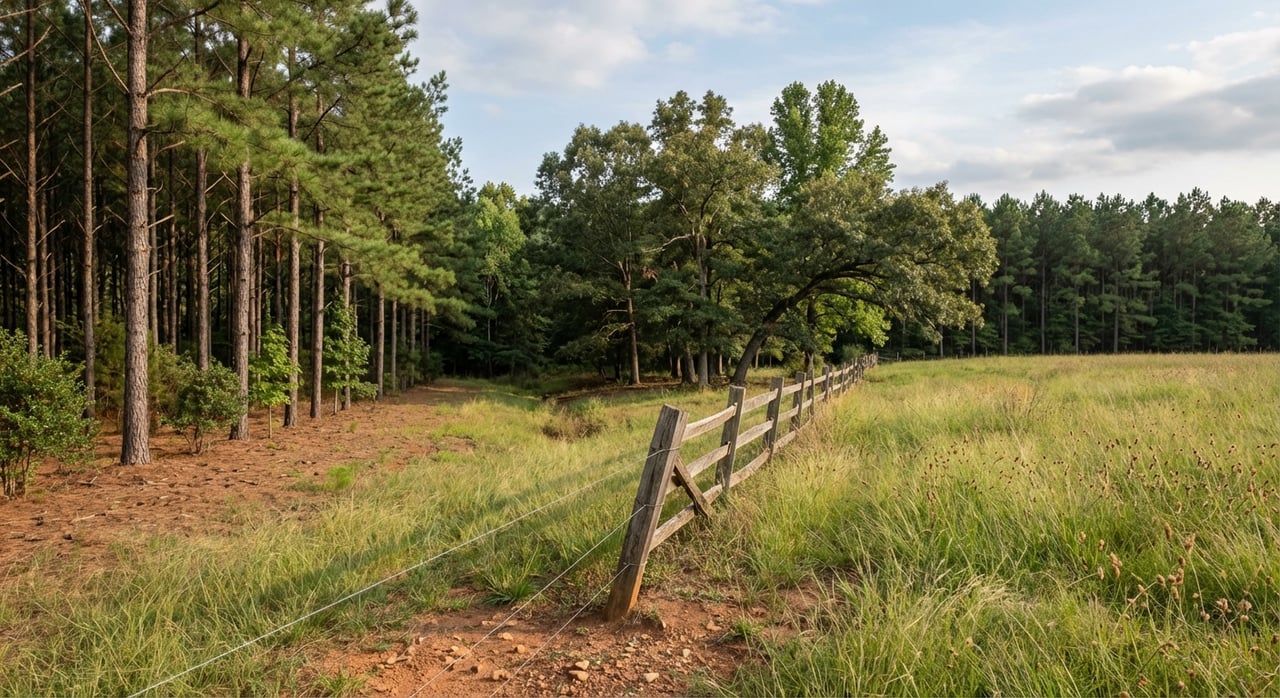
Many of the best all-around tracts pair pine on the ridges with hardwoods along creeks and a few small openings.
- Hunting: mosaic habitat with edges and mast is ideal.
- Investment: pine delivers periodic cash flow while hardwoods add long-term value and resilience.
- Management: thin pine on schedule, protect mast trees, and keep 1 to 3 acre openings or food plots mowed and planted.
Resale: mixed stands draw the widest pool, from hunters to timber-minded buyers.
Open pasture
Open acres are less common, but you will find older fields and cutovers that have been converted. On Piedmont soils, pasture requires thoughtful prep and species choice.
- Farming: warm-season forages like bermudagrass and bahiagrass are typical. Bermudagrass is a staple for hay and grazing in Georgia. UGA’s forage guide outlines stand options, fertility, and management for the state (Bermudagrass in Georgia).
- Hunting: open ground adds edge, visibility, and food-plot options, but the best wildlife value comes from a mix of pasture, pine, and hardwood drains.
Establishment and conversion:
- Establishing improved grass stands often lands in the several hundred to about 750 dollars per acre range in first-year costs, depending on species and inputs. Local soil tests and quotes matter more than averages.
- Converting timber to pasture is a project. Clearing, stump removal, grading, subsoiling, lime, and fencing all add up. Get multiple quotes. On flatter, deeper soils near bottoms, work is often simpler.
Resale: productive pasture with water and fencing attracts livestock buyers. In a small county, match improvements to real demand so you do not overbuild.
Buyer profiles: match land to goals
Use your primary goal to drive the search. Here is a fast framework that fits Taliaferro County.
Hunter-first, income second
- Target: mixed timber with hardwood bottoms, small openings, and good internal access.
- Why: mast, edges, and travel corridors improve deer and turkey use. Pine thinnings can offset annual costs.
- Notes: plan for periodic thinning and habitat work. A forester can stage entries to sustain cover.
Livestock or hay-first
- Target: flatter fields or bottoms with deeper, well-drained soils and nearby water.
- Why: bermudagrass or bahiagrass can be productive with proper fertility. Budget for fencing and water.
- Notes: if converting from timber, line up realistic clearing and soil-work bids before you buy.
Timber investor
- Target: planted pine on uplands with reliable access and healthy stocking. Mixed stands are a plus.
- Why: predictable rotations with thinning cash flow and a sawtimber target. Hardwoods add diversification.
- Notes: confirm stand age and volumes with a cruise. Watch local mill capacity and pricing cycles as flagged by the Warnell market commentary.
Carrying costs and incentives
Property tax classification can change your holding costs in a big way.
- CUVA and FLPA: Georgia’s Conservation Use Valuation Assessment and the Forest Land Protection Act can reduce assessed values for qualifying land, with rules and covenants that matter at resale. Learn the basics in the state’s overview of CUVA and FLPA, then confirm eligibility with the Taliaferro County Board of Assessors.
- QTP: Georgia’s Qualified Timberland Property class applies to some timberland not enrolled in CUVA or FLPA. Administration evolves, so check current Department of Revenue guidance.
- Cost-share: the Georgia Forestry Commission and USDA programs often support practices like prescribed burning, beetle prevention, reforestation, and riparian buffers. Sign-up windows and pay rates vary, so contact local offices early.
Due diligence checklist
Run this checklist before you make an offer.
- Map the soils. Use the Web Soil Survey to flag depth to bedrock, drainage, and any pond or septic constraints.
- Get a timber cruise. If timber matters, ask a forester for stand age, volumes, and thinning or harvest options with estimated revenues.
- Verify taxes. Ask the county assessor about CUVA, FLPA, and recent valuation practices that would affect your annual costs.
- Test and budget for pasture. Pull soil samples, confirm water plans, and get written quotes for any clearing, sprigging or seeding, and fencing.
- Confirm access and utilities. Look for deeded access on a current survey, check road maintenance, and ask about power and well or septic feasibility.
- Check floodplains and wetlands. Review maps and walk creek corridors to confirm usable upland acres.
- Align habitat and management goals. Decide on food plots, fire, and thinning schedules before you buy so the annual work fits your time and budget.
What boosts resale value here
Certain features reliably stand out in Taliaferro County listings and buyer tours:
- Creek frontage and hardwood bottoms with visible mast trees
- Paved road frontage with solid, all-season access
- Internal road systems and clear, usable openings
- Proximity to area recreation like A. H. Stephens State Park in Crawfordville
- Clean surveys, documented access, and straightforward tax status
Put these features front and center in your marketing. If you own already, plan improvements that lift usability and reduce buyer uncertainty, like better internal roads and a recent timber cruise.
Ready to pick the right acres for your goals in Taliaferro County? We specialize in Georgia land and back every listing with parcel-first data and clear next steps. Reach out to Georgia Land Brokerage to Request the Property Packet.
FAQs
Should you pick timberland or pasture in Taliaferro County?
- Start with your primary goal. For hunting and resale appeal, mixed timber with hardwood bottoms is versatile. For livestock or hay, flatter fields with deeper soils make pasture conversion more practical.
What do Taliaferro’s soils mean for pasture conversion?
- Piedmont soils often have clayey subsoils and can be shallow to bedrock, which raises clearing and subsoiling costs. Use the NRCS Web Soil Survey and local soil tests before you budget.
How do timber prices affect my return?
- Pine stands can produce thinning revenue and a sawtimber payoff, but prices move with mill capacity and housing demand. Track regional context through UGA Warnell’s market updates and time entries accordingly.
Which Georgia tax programs can lower holding costs?
- CUVA and FLPA can reduce assessed values for qualifying land, while QTP applies to some timberland outside those programs. Confirm details with the county assessor before you buy.
What is a smart first step before making an offer?
- Pull parcel soils on NRCS Web Soil Survey, then line up a timber cruise or pasture conversion quotes to confirm the tract fits your plan and budget.