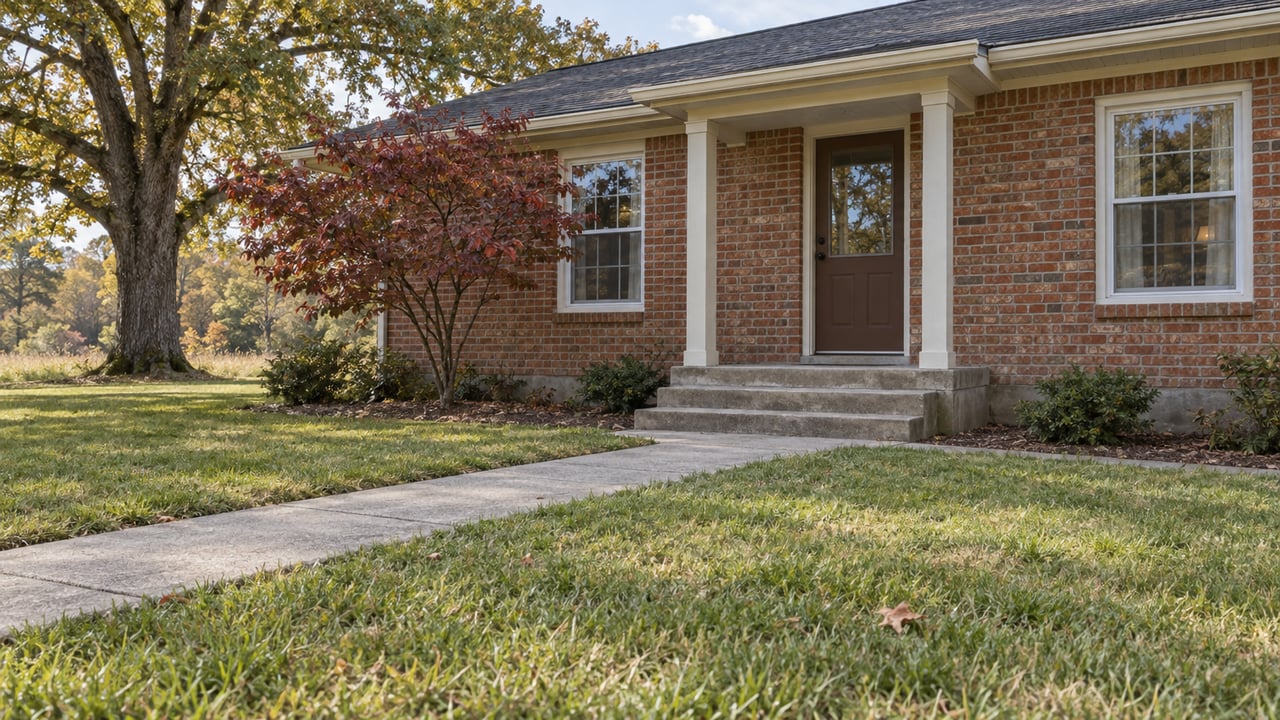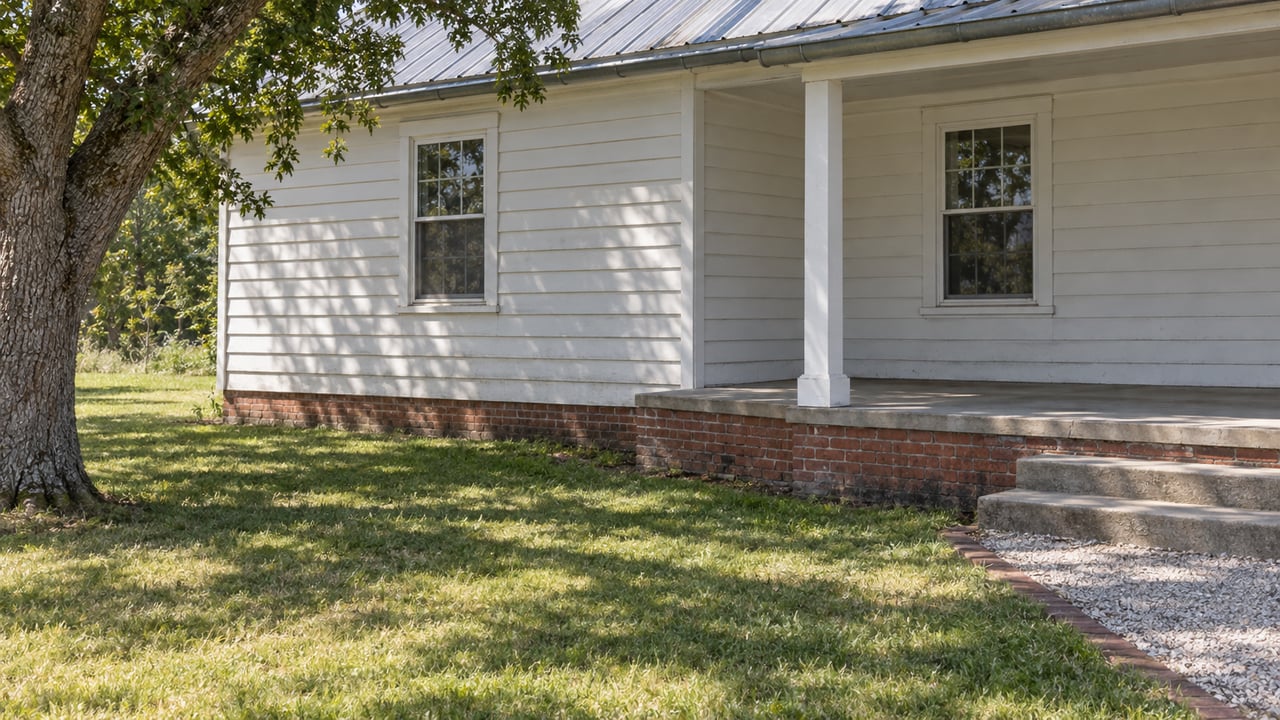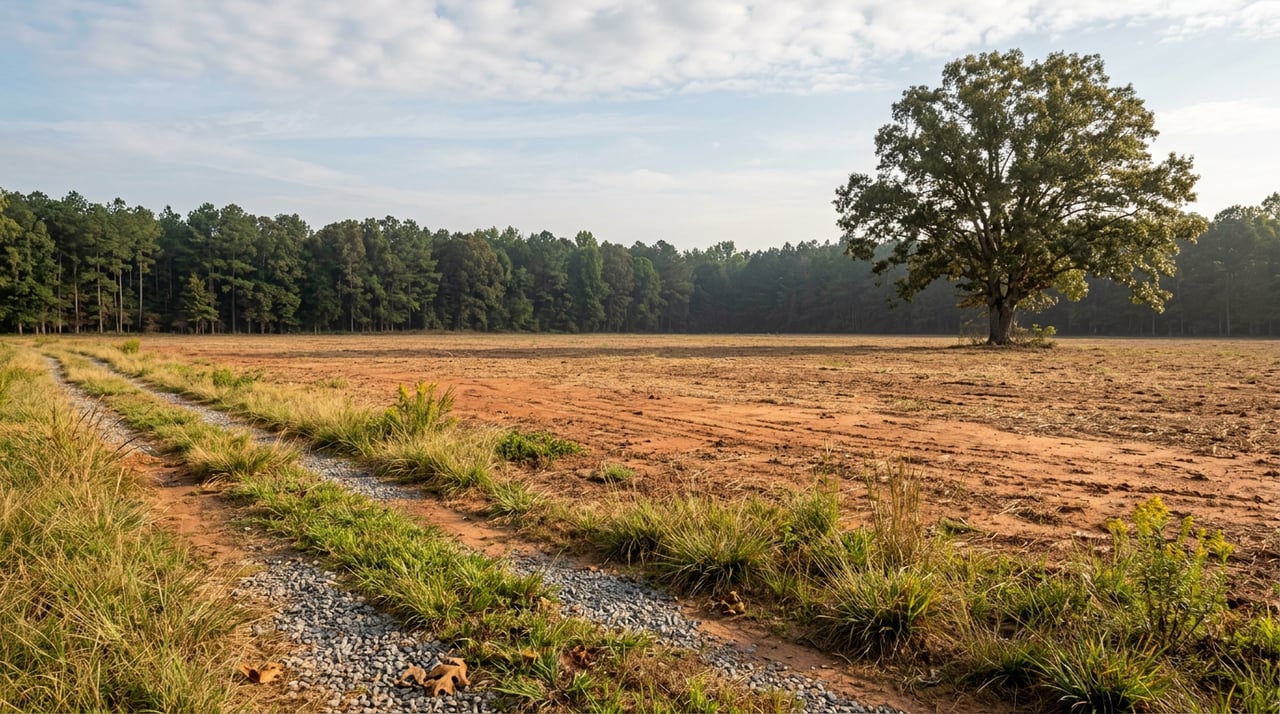
On May 6, 2026, Taliaferro County posted a Commercial Poultry House Moratorium on the front page of its official site. The obvious read is that acreage values will soften because one use has been paused. The actual mechanism is more interesting, and if you are writing an offer this summer, more useful. A moratorium does not lower the price of every tract. It removes one class of buyer from the table, which quietly re-ranks which parcels command a premium and which sit.
The friction most buyers hit first
A moratorium hits a live deal before it hits a market report. If you are under contract on a tract you planned to use for a contract-grower operation, or if your due diligence period assumes you can pull a land disturbance permit for poultry houses, the timeline moved without you. Regional precedent is worth reading closely here. When Gordon County enacted an emergency poultry moratorium in 2021, county counsel there was explicit that "pending applications have a right to go ahead and be heard on their merits" under Georgia Supreme Court law, meaning applications already in the queue proceeded while new ones froze. That distinction, vested versus new, is where most transaction friction lives. If your contract references a specific intended use, the moratorium's effective date and its treatment of pending applications are the two lines you want to verify before your inspection period closes.
Gordon County resolved its moratorium in December 2021 by amending its Unified Land Development Code so that new operations now require direct commission approval, a case-by-case review rather than a by-right permit. That is a reasonable template for how Taliaferro's pause is likely to end: not a ban, a filter.
What the ordinance actually constrains
The county's own posting frames the pause around zoning approvals, building permits, and land disturbance permits for new or expanding commercial poultry operations. That language matters because it does not touch small backyard flocks, existing houses, timber management, row crop rotation, or residential construction. The universe of affected tracts is narrower than the headline suggests.
To understand which parcels the pause actually removes from play, look at setback math. UGA Extension guidance (Circular C931) documents that Georgia's established poultry counties commonly use setbacks of 100 to 400 feet from property lines and 300 to 500 feet from dwellings. Setback distance is the single variable that determines whether a given tract is even a candidate for houses, because it dictates minimum acreage.
| Property-line setback | Minimum acreage for a four-house operation (rectangular land) | Realistic acreage on typical irregular tracts |
|---|---|---|
| 200 ft | ~14 acres | 30 to 40 acres |
| 400 ft | ~30 acres | meaningfully higher |
| 1,000 ft | ~130 acres | "several hundred acres" per UGA |
Numbers per UGA Extension, Facts for County Planners: Set-Backs for Poultry Houses.
That table is the argument. If Taliaferro re-emerges with modest setbacks in a revised ordinance, most 40-plus acre tracts remain viable and the moratorium is a delay. If it re-emerges with 1,000-foot setbacks, the effective inventory of poultry-buildable land collapses to a handful of large, well-buffered parcels, and those parcels get scarcer, not cheaper.
Which Taliaferro tracts the pause quietly favors
Taliaferro has roughly 15 to 25 land listings on the market at any given time depending on the portal, and current active inventory includes tracts like a 154.7-acre timberland parcel on Center Hill Road listed at $772,727 in February 2026 and a 117-acre tract on Lyneville Road listed at $619,515 in April 2026. Median per-acre pricing sits around $5,295 based on land brokerage aggregates, with recreational-tract listings running higher on a per-acre basis because timber and access improvements are already priced in.
Here is the pattern to watch. Poultry-operation demand is a specific buyer profile: integrator-contract growers who need flat ground, road access, buffered neighbors, and enough acreage to hit setback math. That buyer values raw ag suitability. The moratorium temporarily removes that buyer from the bidding pool, which means:
- Timber and recreational tracts are largely unaffected. Hunting, hardwood investment, and legacy-tract demand does not overlap with poultry demand. Expect these to continue trading on their own fundamentals.
- Flat, open, well-buffered ag tracts near the Harrison Poultry feed mill corridor lose one bidder. In the near term, sellers of these specific parcels have less pricing tension. In the longer term, if the county lands on a case-by-case review model like Gordon County did, the tracts that clear the new rules become more valuable, not less, because the pathway to a permit has become a proven asset rather than a default assumption.
- Exurban lifestyle parcels along the I-20 and Hwy 278 corridor are on a different demand curve entirely. Commuter and small-homestead buyers were not competing with poultry-house siting to begin with.
The Harrison Poultry factor
Harrison Poultry's feed mill development, announced as a roughly 300-acre industrial site expected to generate around 236 jobs and, per Harrison's own executive at the time, more than $200 million in longer-term investment including a hatchery and processing plant, is the reason the moratorium is a market event and not a footnote. A feed mill's economics only work if there are grower houses within a reasonable radius supplying it. That is the market gravity Taliaferro landowners have been sitting near.
A moratorium in a county with a working feed mill is a different signal than a moratorium in a county without one. It suggests the ordinance is being calibrated, not the industry rejected. Read it that way and the pause becomes a leading indicator of where the rules will settle, which is exactly the kind of information a buyer wants before the rules settle.
Before you sign, verify these five things
- The moratorium's current status and expiration or review date. These are typically written with a sunset. Confirm it directly with the county rather than a third party.
- Whether your application is vested. If a prior owner or the seller filed anything, that paperwork may still have standing.
- The tract's setback math under both current and plausible future ordinance language. Model the parcel at 200, 400, and 1,000 feet from property lines using the UGA table above. If your tract still works at 1,000 feet, use is durable. If it only works at 200 feet, use is contingent on a favorable ordinance revision.
- Neighboring dwellings and their setbacks. Reciprocal setback rules mean a new dwelling built on an adjoining parcel during the moratorium can foreclose future poultry siting even after the moratorium lifts.
- The contract language on intended use, permitting contingencies, and outside dates. If the deal was priced for poultry, either the price or the contingency has to move.
For owners holding a poultry-suitable tract
The reflex is to hold and wait. Sometimes right, sometimes not. If your parcel's value premium came from its poultry suitability, a marketing packet that quietly documents setback compliance, road frontage, three-phase power access, and neighbor buffers becomes more valuable during the moratorium, not less. When the county re-opens permitting under whatever revised rule set arrives, tracts with a documentation-ready file are the ones that transact first. This is what a productized listing is for.
FAQ
Does the moratorium affect existing poultry houses in Taliaferro County? No. The county's language targets new commercial operations and expansions of existing ones, not operation of houses already built. Elsewhere in Georgia, existing facilities have typically been grandfathered as non-conforming when ordinances are rewritten, per UGA Extension guidance.
Will land prices drop across the board? Unlikely as a category effect. Timber, hunting, recreational, and lifestyle demand are independent of poultry siting. The parcels most exposed are flat, buffered ag tracts specifically suited to grower houses, and even those are exposed to a demand pause, not a valuation collapse.
How long do Georgia poultry moratoria usually last? There is no fixed answer, but the Gordon County comparison ran from August to December 2021, roughly four months, and closed with an ordinance amendment rather than a lift. Reasonable planning assumption: a few months to a couple of quarters, ending in a revised ordinance.
Who decides when it lifts? The Taliaferro County Board of Commissioners, in coordination with the Development Authority which meets on the fourth Monday of each month at 116 Monument Street in Crawfordville.
If you are evaluating a specific Taliaferro tract this summer and want the setback math, buffer analysis, and permitting-path notes documented before you write an offer or list, Phil Wilson at GA.LAND builds those packets tract by tract. Request the Property Packet.