If you are looking at land in Elbert County, total acreage only tells part of the story. A tract may look great on an aerial, but the real value often comes from how the timber, pasture, and crop ground fit together on the ground. If you want to read a mixed tract with more confidence, this guide will help you understand what to look for in Elbert County and what questions to answer before you price or buy. Let’s dive in.
Why land mix matters in Elbert County
Elbert County is a rural, slow-growing county in Northeast Georgia on the South Carolina border. County government describes it as 374 square miles of rolling hills, and development has historically been centered around Elberton and Bowman instead of spreading evenly across the countryside. That rural pattern helps explain why many available tracts are mixed-use rather than single-purpose properties.
The 2022 Census of Agriculture shows just how important that mix is. Elbert County had 424 farms covering 76,233 acres in farms, with 40.3% woodland, 30.4% cropland, 24.4% pastureland, and 4.9% other land. Many farms were mid-sized, too, with 43% in the 50 to 179 acre range and 31% in the 10 to 49 acre range.
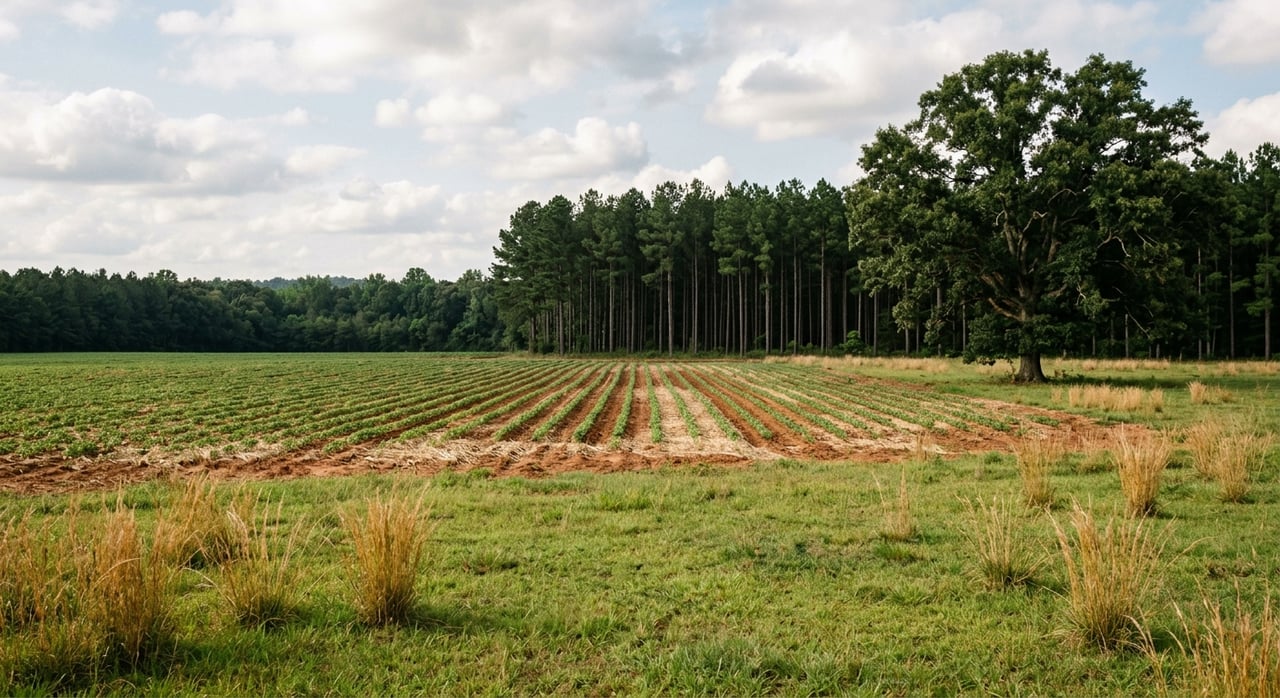
That matters because a lot of land here is not simply timberland or simply pasture. It is often a combination of woods, open ground, hay acreage, and workable fields. In Elbert County, you usually need to judge each component on its own and then ask how those pieces work together.
What the county numbers tell you
Elbert County’s farm profile shows a strong working-land identity. In 2022, the county reported 8,528 acres of forage and hay, 2,865 acres of wheat, and 2,686 acres of soybeans. It also reported 9,269 cattle and calves and more than 5.6 million broilers and other meat-type chickens.
Sales data is also useful for reading a tract. The county’s agricultural sales were 97% livestock, poultry, and related products, with 3% from crops. That tells you pasture, hay ground, and supporting open acreage can have real practical value even when a listing looks timber-heavy at first glance.
For buyers and sellers, the takeaway is simple: acreage alone is not enough. A tract with a strong balance of usable woods, productive pasture, and efficient crop ground may outperform another tract with the same total acreage but a weaker layout.
Reading timber value on a mixed tract
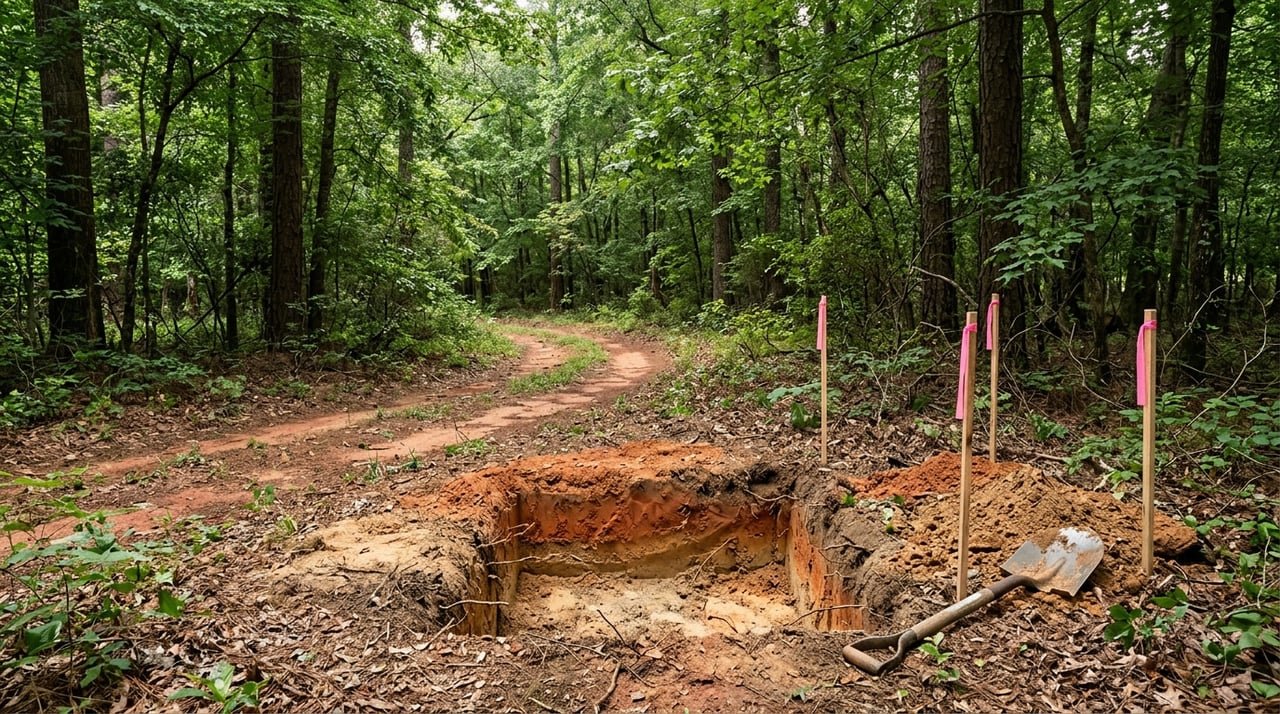
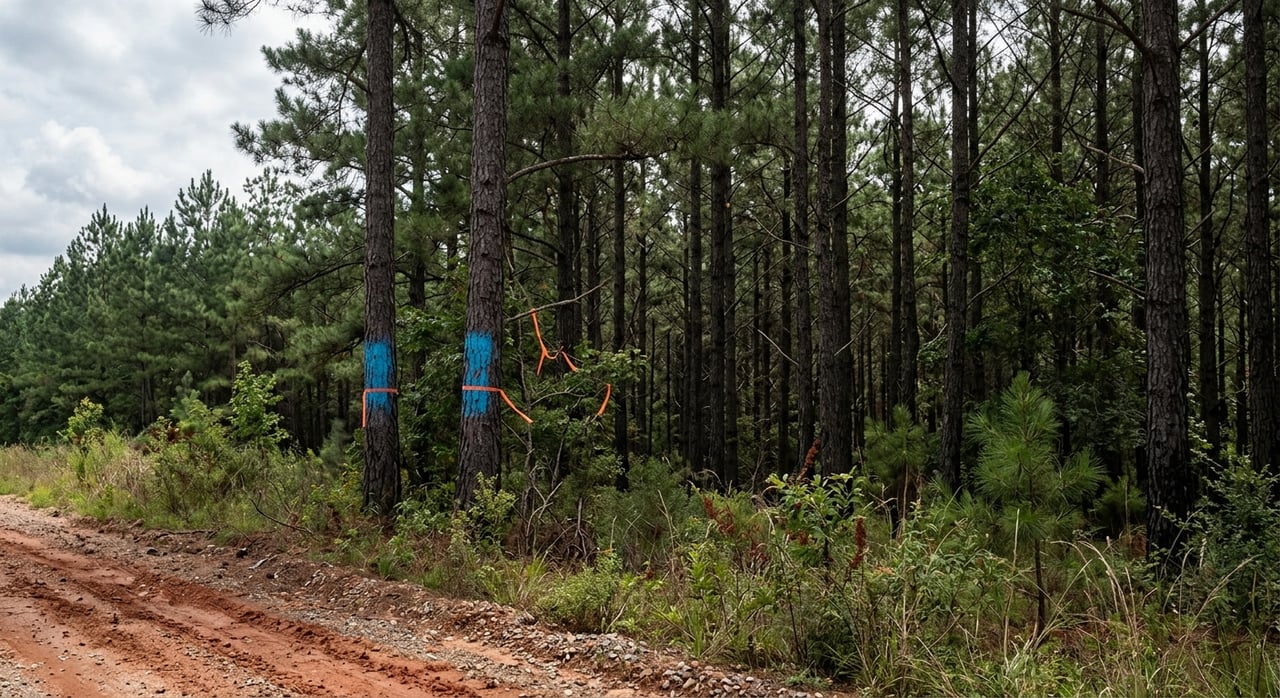
Timber can be one of the most important pieces of value in Elbert County, but you should avoid judging it by roadside appearance alone. The Georgia Forestry Commission says timber value depends on volume, age, harvest type, operability, topography, access, sawtimber quality, and proximity to a wood-using facility. That means a beautiful stand of trees may still be discounted if it is hard to reach or hard to log.
On mixed land, access is often where value is won or lost. If trucks cannot reach the timber block efficiently, or if slopes make harvest difficult, that affects the economics. A drone image may show a full canopy, but the tract itself may tell a different story once you look at roads, grades, and turn space.
Elbert County also lists timber harvest permits among its planning and code enforcement resources. That is a useful reminder that harvest activity should be checked against local requirements early in the diligence process. If timber is a meaningful part of the property, the Georgia Forestry Commission recommends using a registered consulting forester and a written timber sale contract.
Timber questions to ask
- How much of the wooded acreage appears operable?
- Is there direct and practical access for equipment and trucks?
- Are slopes or wet areas limiting harvest options?
- Does the timber block feel contiguous, or is it broken up by creeks, buffers, or narrow necks?
- Has a consulting forester reviewed the tract?
Reading pasture and hay ground
Pasture is not just open space. In a county with 8,528 acres of forage and hay and 9,269 cattle and calves, pasture quality can directly affect carrying capacity and operating value. If you are evaluating open ground, fertility and management history matter.
UGA Extension says a soil test is the best tool for assessing fertility. The Elbert County Extension office offers routine soil tests that report pH and nutrient availability with recommendations. UGA also notes that forages in Georgia generally grow best around a pH of 6.0 to 6.5.
That means a green-looking field is not always a productive field. Separate sampling is important when soil type or management differs, and UGA advises avoiding manure or congregation areas when taking samples. Pastures should generally be sampled every three years, while hayfields should be sampled annually.
What to look for in pasture
- Contiguous open acreage instead of scattered pockets
- Usable slope for mowing, fencing, and livestock movement
- Access to the pasture from roads or interior lanes
- Signs that one field may need to be treated separately from another
- A plan for soil testing before major lime or fertilizer decisions
Reading crop ground beyond the aerial
Crop sales were a smaller share of county farm sales than livestock in 2022, but crop ground still matters in Elbert County. The county reported $5.651 million in crop sales, and wheat and soybeans were among the top harvested crops by acreage. Open fields can add meaningful flexibility to a tract when they are workable, well-shaped, and easy to manage.
The key is not just whether ground is open. It is whether it is practical. A field that looks large on an aerial may lose efficiency if it has irregular edges, drainage issues, or narrow access points that make equipment movement harder.
UGA’s soil guidance reinforces that point. Fertilizer recommendations depend on how well a sample represents the field, and different management zones should be sampled separately. In plain terms, the best crop acres are usually the acres that are contiguous, accessible, and consistent enough to manage efficiently.
Start with soils and slope
When you first review a mixed tract, soils and slope are a smart place to begin. USDA NRCS says Web Soil Survey is the official current source for soil survey information and supports land-use and management decisions with custom reports for a county or property. For a mixed tract, that helps you compare whether timber, pasture, and fields sit on similar soils or on different map units with different drainage and productivity.
UGA also notes that Piedmont soils are typically upland, well-drained red soils with low native phosphorus relative to their needs. In Elbert County, that makes it especially important to watch for slope breaks, wet pockets, and color changes across the tract. Those small transitions can affect where pasture performs well, where crops work best, and where timber may be more or less operable.
On-site signs worth noticing
- Sharp changes in slope
- Wet or soft ground near bottoms
- Field edges that shift in color or vigor
- Narrow drainages cutting through open acreage
- Woods that look accessible on one side but not the other
Cross-check maps with county records
Aerials are helpful, but they are not the final word. Elbert County’s tax information says the Board of Tax Assessors determines property values and directs property owners to the county assessor records. That makes parcel lines, tax records, and any current-use status worth checking before you assume the map matches real-world use.
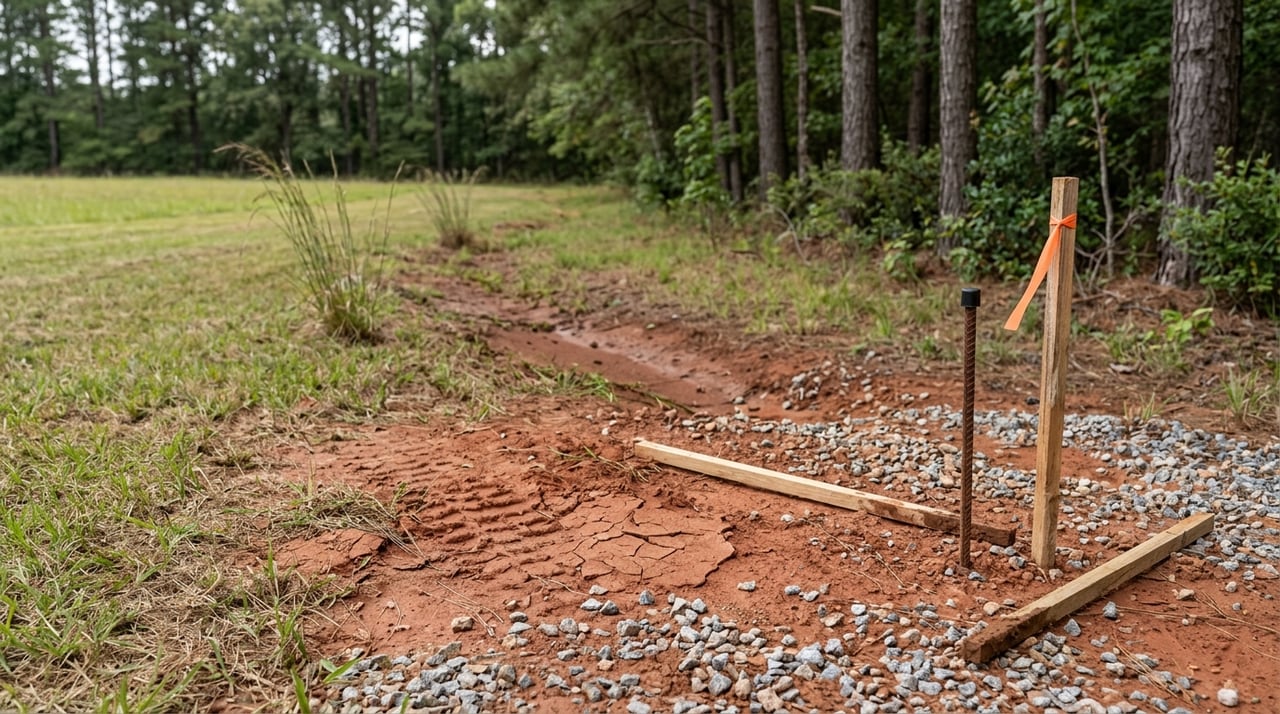
This step matters on mixed tracts because boundary placement affects every part of value. A field may appear to run cleanly to a tree line on an image, but the parcel line may cut through it differently. The same is true for woods, road frontage, and creek bottoms.
Watch drainage, buffers, and usable acres
Some acreage looks larger on paper than it feels in practice. Elbert County’s comprehensive plan identifies major water resources including Beaverdam Creek and the Broad and Savannah Rivers, and it notes a 100-foot vegetative buffer along the Broad River corridor. That means bottomland and creek frontage should be reviewed carefully when estimating practical use.
If part of a tract is wet, buffered, or flood-prone, that may reduce the acres you can actively use for timber harvest, grazing, or row crops. This does not make the land bad. It simply means you should separate total acreage from usable acreage when you compare properties.
Due diligence checks before you price or buy
Elbert County offers several practical local resources for mixed-land diligence. The Elbert County Extension office in Elberton offers soil testing, water testing, feed and forage testing, and plant diagnosis. For a tract with multiple land types, that local support can help you evaluate each zone more accurately.
County permitting should also be part of your early review. Elbert County lists building permits, mobile home permits, timber harvest permits, land disturbance permits, 911 address permits, sign permits, and electrical permits. If your plan includes building, clearing, grading, or harvesting, it is smart to clarify the path early.
Taxes are another major factor. Georgia Department of Revenue guidance says conservation-use property is assessed at 40% of its current use value, bona fide agricultural property can be assessed at 75% of other property, and forest land has its own framework under the Forest Land Protection Act. Buyers should confirm eligibility, acreage limits, and filing deadlines with the county board of assessors because tax treatment can materially change carrying costs.
A simple way to read a mixed tract
If you want a practical framework, break the property into three layers. First, identify how many acres are actually timber, pasture, and crop ground. Second, study how usable each section is based on soils, slope, access, drainage, and shape. Third, decide whether the layout makes the whole tract work better together.
That last step is where many buyers gain clarity. A property with modest acres in each category may still be stronger than a larger tract if the layout is efficient, access is clean, and each section supports the others. In Elbert County, that kind of balance often matters more than a simple total-acre count.
If you are comparing land in this market, it helps to think like a land specialist. Read the map, then read the ground. When the numbers, layout, and county-level details line up, you are much closer to understanding the real value of the tract.
If you want help evaluating an Elbert County tract, pricing a mixed-use parcel, or preparing a data-rich listing for the market, Georgia Land Brokerage can help you sort through access, land mix, timber considerations, and parcel-level due diligence.
FAQs
What does mixed land mean in Elbert County?
- Mixed land in Elbert County usually means a tract includes more than one major land type, such as timber, pasture, hay ground, or crop fields, instead of being a single-use property.
Why is pasture important on Elbert County land?
- Pasture matters because Elbert County has a meaningful livestock and forage base, including 8,528 acres of forage and hay and 9,269 cattle and calves in the 2022 Census of Agriculture.
How should you evaluate timber on an Elbert County tract?
- You should look beyond appearance and consider access, topography, operability, timber quality, and harvest conditions, which the Georgia Forestry Commission identifies as key value drivers.
How can you check soils on Elbert County land?
- You can start with the USDA NRCS Web Soil Survey and then use Elbert County Extension testing services to evaluate soil fertility, pH, and management needs for pasture, hay, or crop ground.
What county checks matter before buying Elbert County acreage?
- Key checks include parcel records, assessor information, current-use tax status, access, drainage, local permit requirements, and whether buffers or wet areas reduce usable acreage.
Can tax treatment affect the cost of owning Elbert County land?
- Yes. Georgia current-use programs and forest land rules can change carrying costs, so buyers should verify eligibility and deadlines with the Elbert County board of assessors before relying on a tax assumption.