Buying land can look simple on paper until you start adding up the real cash you need. If you are planning to buy land in Elbert County, it helps to know that the price of the parcel is only one part of the story. You also need to think about down payment, due diligence, closing costs, site work, and ongoing taxes so you can budget with confidence. Let’s break it down.
Start With Three Cash Buckets
The easiest way to plan for a land purchase in Elbert County is to split your budget into three buckets:
- Money to close
- Money to make the land usable
- Money to carry the property
That approach keeps you focused on the costs that surprise buyers most often. A tract may seem affordable at first glance, but the real question is how much cash it takes to buy it and move forward with your plans.
Money to Close on Land
For most buyers, the biggest upfront cost is the down payment. Published land-loan guidance points to a 15% to 25% down payment range for many ordinary land purchases. Some lenders may finance up to 85% of the purchase price, which is why 15% down is a practical minimum for many financed tracts.
There are special cases, but they are not the norm. For example, qualifying young, beginning, and small farmers may find programs with lower cash-down requirements, including a 5% option through a joint-financing structure. If you do not clearly qualify for a special program, it is safer to budget in the 15% to 25% range.
Sample Down Payment Math
Here is what that range looks like at a few example price points:
| Purchase Price | 15% Down | 20% Down | 25% Down |
|---|---|---|---|
| $75,000 | $11,250 | $15,000 | $18,750 |
| $100,000 | $15,000 | $20,000 | $25,000 |
| $150,000 | $22,500 | $30,000 | $37,500 |
| $250,000 | $37,500 | $50,000 | $62,500 |
For most financed land purchases, this is the number that drives your cash requirement more than basic closing fees do.
Closing Costs Buyers Often Miss
Closing costs on raw land are usually smaller than the down payment, but they still matter. In Georgia, deeds must be recorded, and the statewide deed recording fee is $25.
Georgia also charges a real estate transfer tax of $1 for the first $1,000 of sale price plus 10 cents for each additional $100 or fraction thereof. By law, the seller is liable for that tax, though a contract can shift the cost. That means you should read your purchase agreement closely and ask who is paying it before you finalize your budget.
If you finance the property with a long-term note, there may also be intangible recording tax at $1.50 per $500 of the note. In addition, published Georgia closing-fee schedules show settlement or attorney charges commonly landing in the low hundreds of dollars, such as $150 to $300, before title insurance and lender-specific fees are added.
Due Diligence Cash Before You Build
Vacant land has its own checklist, and that checklist costs money. If you plan ahead for those items, you are much less likely to feel squeezed after you go under contract.
Survey Costs
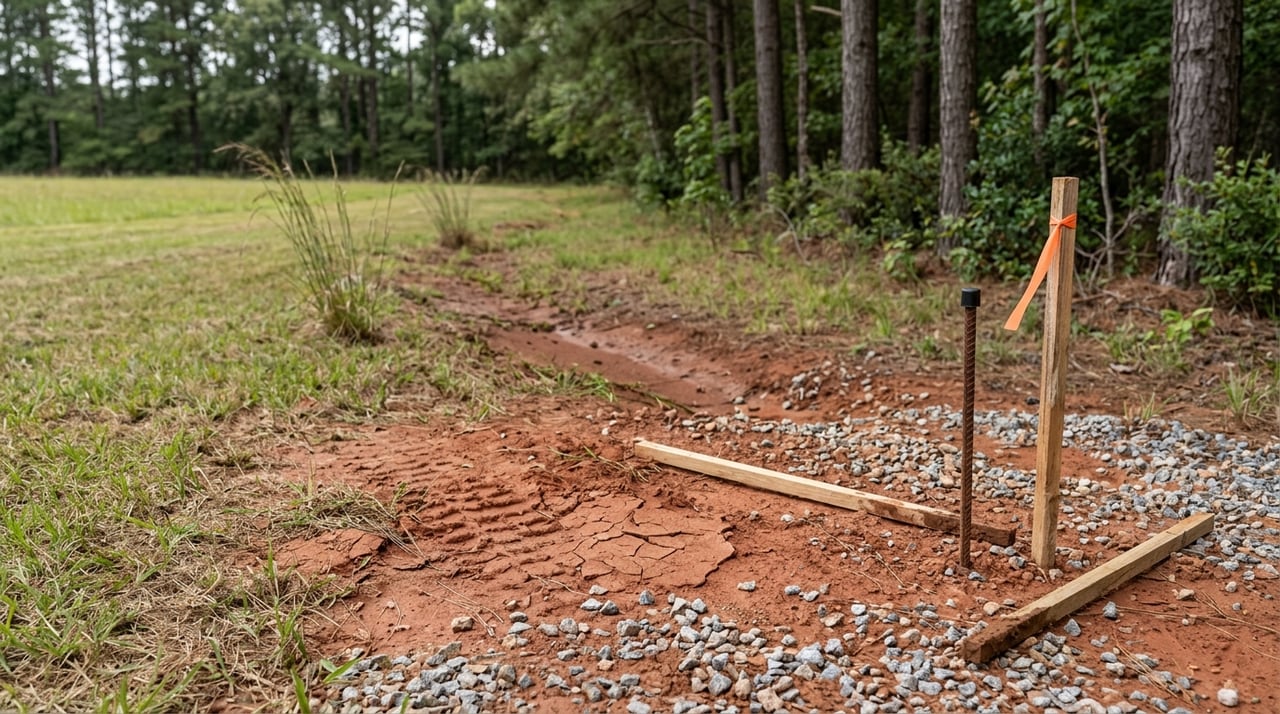
A survey is one of the most common line items buyers forget. Current cost guides show land surveys averaging about $200 to $1,200, with a boundary survey on a one-acre parcel often around $500 to $1,000.
Larger tracts may cost more overall, though sometimes less per acre. The exact number depends on the size and complexity of the parcel, but a survey is often one of the first smart dollars you spend.
Soil and Septic Readiness
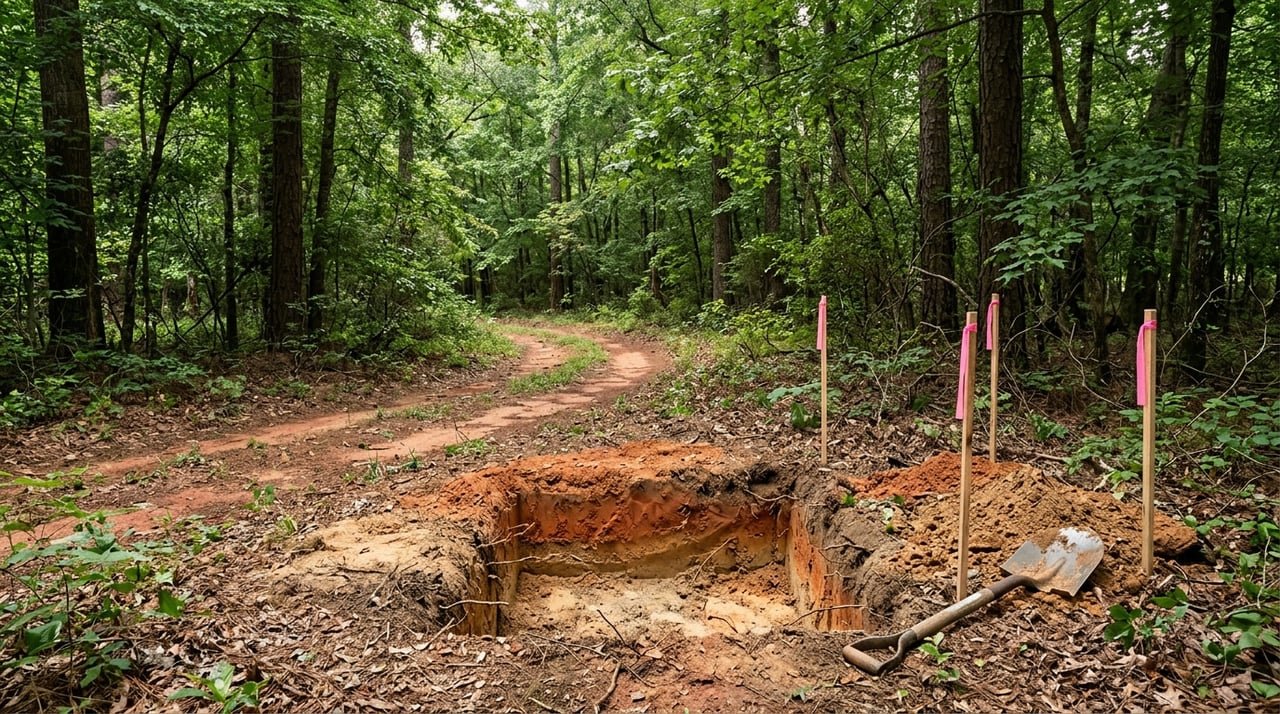
If you want to build, soil work can become a meaningful part of your budget. Published perc-test ranges show $200 to $1,500 for a hand-dug test and $500 to $3,000 or more for excavator-dug work.
In Georgia, onsite sewage review may require test holes, percolation tests, and soil reports. Elbert County’s building permit application also states that a septic tank permit from the Health Department is required, and the site plan must show the well, septic, home, other buildings, and driveway locations.
For a nearby planning proxy on local health-related fees, Franklin County Environmental Health publishes $125 for a pre-purchase or site evaluation and $250 to $300 for a residential septic tank permit. That is not an Elbert County fee schedule, but it gives you a reasonable reference point when building an early budget.
Site Work Can Change the Budget Fast
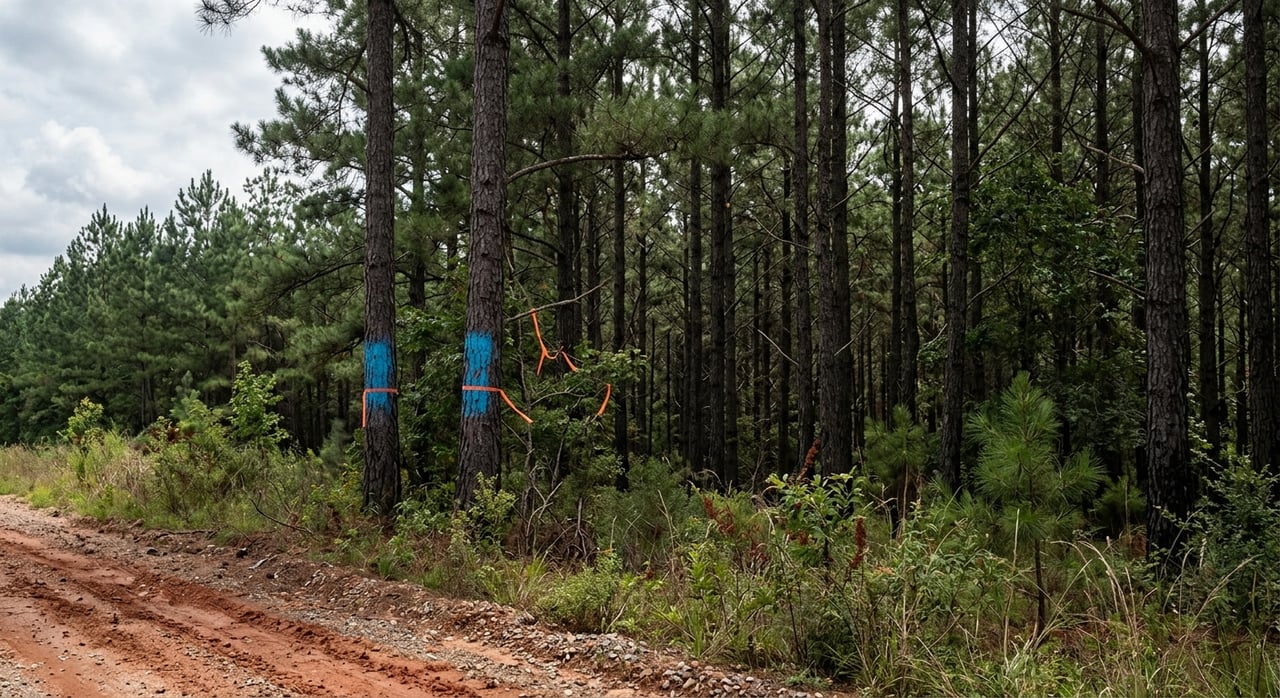
This is where raw land can stop being cheap. If the tract is wooded, lacks access improvements, or needs clearing before use, first-year costs can climb quickly.
Clearing Costs
Current cost guides put land clearing at about $1,200 to $8,000 per acre on average. A lightly wooded site and a heavily wooded site can land in very different places within that range.
If your goal is a homesite, driveway, food plot, or general access, this number deserves real attention. On some parcels, clearing costs can be much larger than your closing costs.
Driveway Costs
If the tract needs a new gravel driveway, published ranges run about $4 to $10 per square foot. That puts a basic 100-foot by 10-foot driveway at roughly $4,000 to $10,000.
For a roadless tract, a new driveway may not feel optional. It may be one of the first improvements needed just to use the property comfortably.
Elbert County Land Disturbance Permit Fees
Elbert County adds a permit cost when land disturbance work is involved. The county’s application lists permit fees at $40 per acre plus $4 per tenth of an acre disturbed.
If you are grading for access, cutting in a driveway, or clearing an area for future use, that fee should be part of your plan before work starts.
Don’t Forget Annual Property Taxes
Even if you buy land with cash, you still need to carry the property after closing. In Elbert County, annual property tax is an important piece of the budget.
Georgia taxes real property at 40% of fair market value. Public planning documents show an unincorporated Elbert County rate of 10.183 mills and an Elbert County School District gross M&O millage of 13.481 mills for FY26.
Using those figures as a planning proxy, unincorporated land is about 23.664 mills combined for county plus school tax. On a $100,000 parcel, that works out to about $946.56 per year before exemptions or any city taxes.
The county tax commissioner states that real estate taxes are normally due by November 15. If you are budgeting carefully, it is smart to hold back funds for that bill rather than treating it as an afterthought.
Quick Property Tax Formula
For unincorporated Elbert County land, a planning formula is:
Fair market value × 0.40 × 23.664 ÷ 1000
That gives you a simple estimate for annual county-plus-school tax using the published figures above.
A Simple Elbert County Land Budget
Here is a straightforward worksheet you can use when running the numbers on a tract:
- Purchase price: your contract price
- Down payment: usually 15% to 25% for many land loans
- Survey: often about $500 to $1,000 for a small boundary survey
- Soil or perc work: about $200 to $1,500 for hand-dug testing, or $500 to $3,000+ for excavator-based work
- Closing and recording costs: $25 deed recording fee, plus transfer tax if your contract shifts it to you, plus any attorney, title, lender, or note-related charges
- Land disturbance costs: Elbert County permit fees plus any clearing or grading work
- Access costs: driveway installation if needed
- Annual property tax reserve: ongoing carrying cost after closing
This worksheet works because it forces you to think beyond the sticker price. That is often the difference between a tract that fits your budget and a tract that creates surprises.
What a Realistic Cash Plan Looks Like
For a simple financed tract, your first-year cash need is often the down payment plus a few thousand dollars for survey, soil work, and basic closing items. If the property is already accessible and does not need much prep, that may be enough to get you started.
For a wooded tract or one without a usable driveway, the first-year cash need can rise into the five figures beyond the down payment once you add clearing, access work, and county permit costs. That is why two parcels with the same purchase price can have very different real-world costs.
If you are a cash buyer, you avoid the down payment and loan-related taxes. But you still need to budget for survey, soil work, permits, site prep, and annual property taxes.
Why This Matters Before You Make an Offer
Land buyers often focus on acreage, road frontage, or price per acre first. Those are important, but they do not tell you how much cash you actually need in the bank to buy and use the property.
A practical budget gives you a clearer picture of what you can pursue right now. It also helps you compare parcels more intelligently, especially when one tract is ready to use and another needs major prep work.
If you want help sorting through parcel-level details like survey needs, access questions, soil-readiness issues, or what a tract may require before closing, Georgia Land Brokerage can help you evaluate the numbers and move forward with more confidence.
FAQs
How much down payment do you usually need to buy land in Elbert County?
- For many ordinary land purchases, a practical planning range is 15% to 25% down unless you qualify for a special financing program.
What property taxes should you expect on land in unincorporated Elbert County?
- Using current published county and school millage figures as a planning proxy, a $100,000 parcel in unincorporated Elbert County works out to about $946.56 per year before exemptions or city taxes.
What closing costs matter when buying land in Elbert County?
- Common budget items include the $25 deed recording fee, possible transfer tax if your contract makes you pay it, possible intangible recording tax on a financed long-term note, and attorney or settlement charges that often run in the low hundreds.
What due diligence costs should you budget for on Elbert County land?
- Buyers commonly budget for a survey, possible soil or perc testing, and any health-department-related septic review needed for future building plans.
What site-work costs can raise your first-year land budget in Elbert County?
- The biggest items are often land clearing, driveway installation, and Elbert County land disturbance permit fees if you plan to grade or clear the site.
When are property taxes usually due for land in Elbert County?
- The Elbert County tax commissioner says real estate taxes are normally due by November 15.