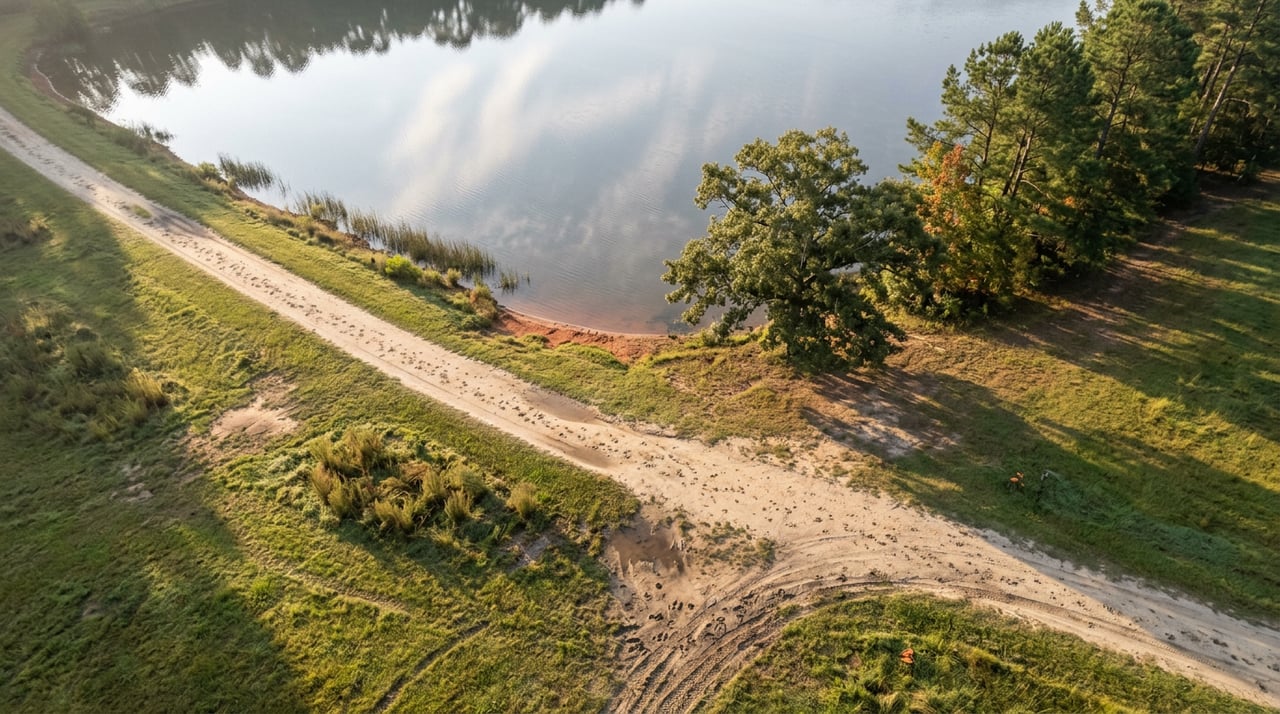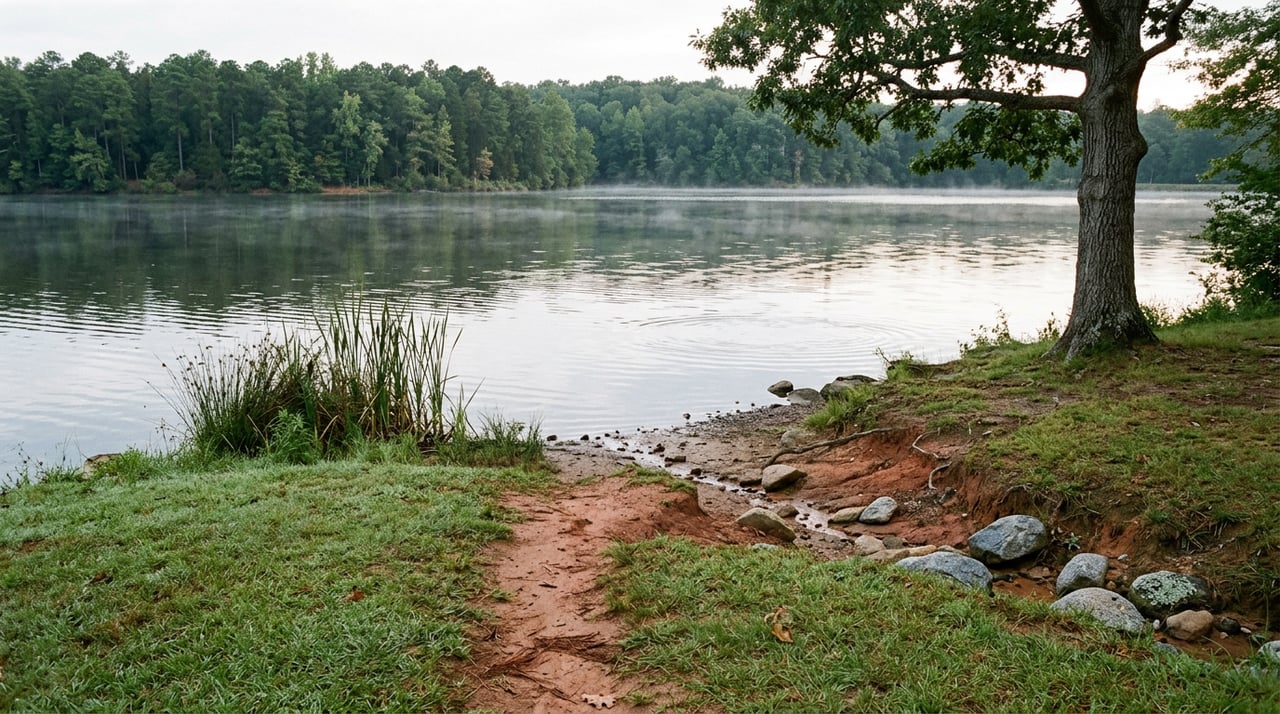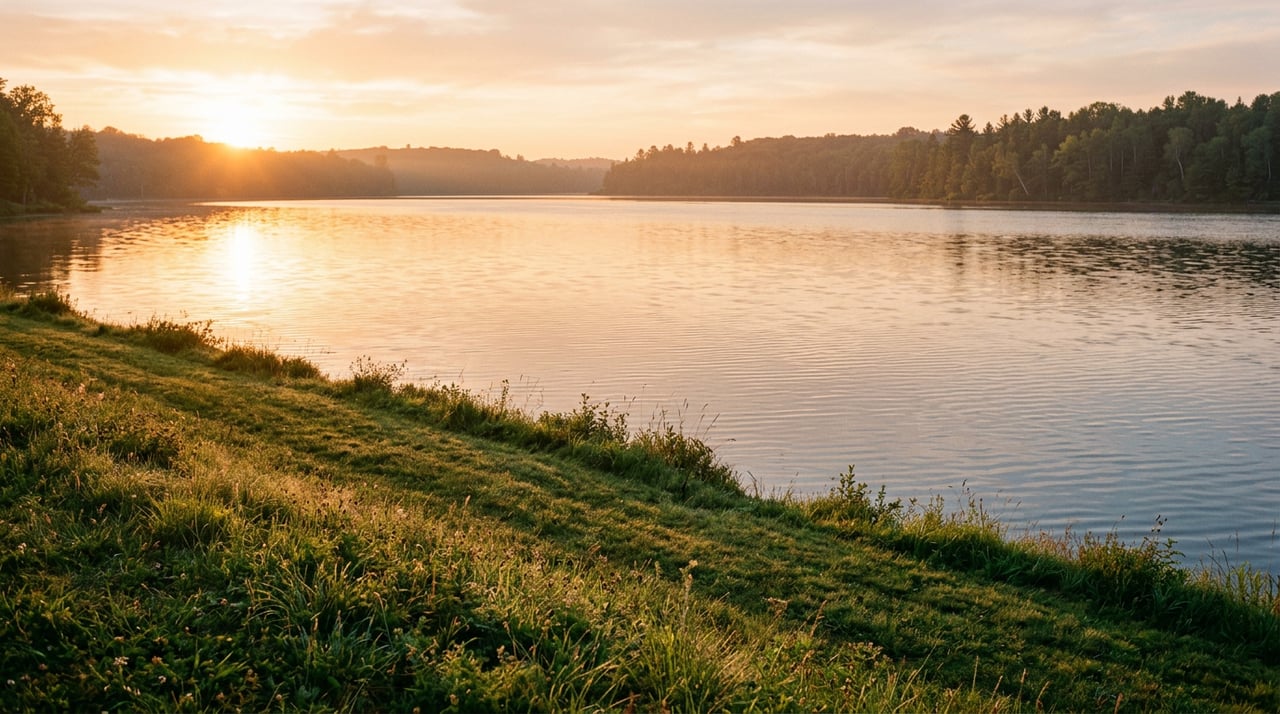
Stand on the tee box at the 14th hole at Arrowhead Pointe and look toward the water. You'll see Lake Richard B. Russell curling around a peninsula, tree lines holding their ground on every bank, and not one dock, not one house, not one pontoon boat tied up in a private slip. For a golf course that regularly gets mentioned in the same sentence as Augusta National, that's the strange part. Most courses with views like this get bought up, subdivided, and lined with lake homes within a decade. This one can't be.
That's not marketing language. It's federal law. Richard B. Russell Lake is a U.S. Army Corps of Engineers reservoir, and Corps regulations prohibit private exclusive use of the public land surrounding it. No one can buy a lot on this shoreline and build a dock, no matter how much they'd pay for the view. The result, as more than one outdoors writer has put it, is a lake that feels like a remote Canadian fishing spot while sitting fifteen minutes from downtown Elberton. Arrowhead Pointe is what happens when you drop a championship golf course into that kind of protected ground.
The List Arrowhead Pointe Shouldn't Be On
TravelGolf.com once placed Arrowhead Pointe on its list of the Top 10 Courses in Georgia, in the same grouping as Augusta National, East Lake, TPC Sugarloaf, and Ocean Forest. Arrowhead Pointe was the only public course on that list. Golf Digest named it the second-best new affordable public course in America back in 2005, the same year it was still a relatively new addition to the state park system.
None of that fits the profile of a municipal course. Public tracks inside state parks are usually built for volume: wide fairways, forgiving rough, a clubhouse that doubles as a snack bar. Arrowhead Pointe has TifEagle Bermuda greens, real elevation change cut through hardwood forest, and a routing that architect Bob Walker designed after the state handed him 400 acres inside Richard B. Russell State Park and told him to put the course wherever he needed to. He used the whole peninsula. Ten of the eighteen holes touch the lake.
Ten Years of Rankings, One Consistent Story
Golf Advisor's annual Top Courses in Georgia list has ranked Arrowhead Pointe every year for a decade, and the number bounces around more than you'd expect for a course that hasn't changed:
| Year | Rank Among Georgia Courses |
|---|---|
| 2024 | #2 |
| 2023 | #11 |
| 2022 | #20 |
| 2021 | #14 |
| 2020 | #16 |
| 2019 | #14 |
| 2018 | #3 |
| 2017 | #9 |
| 2016 | #2 |
| 2015 | #8 |
That's not a course losing and regaining quality year to year. Arrowhead Pointe doesn't have a marketing department pushing reviews the way a resort course does, so its rank moves with whichever golfers happened to post about it that season. A course inside a state park earns its ranking one round at a time, which is a slower, noisier climb than a private club gets with a concierge and a media budget. The fact that it lands in the top 20 in Georgia most years anyway, on a course where greens fees are affordable enough that Golf Advisor once slotted it into a Top 25 list for courses under $50, tells you the quality is doing the work.
What Fourteen Holes Actually Feel Like
If you haven't played it, the numbers are worth knowing before you book a tee time. From the back tees, Arrowhead Pointe plays 6,861 yards to a par of 72. The longest hole is the 5th, a 559-yard par 5. The shortest is the 15th, a 145-yard par 3, and it's also rated the easiest hole on the card. The hardest, by the course's own handicap rating, is the 6th, a 430-yard par 4.
The hole locals talk about is the 14th. It's a 406-yard par 4 that juts straight into the lake, with water on enough sides that a mishit tee shot has nowhere to hide. It's the kind of hole you'd expect at a resort charging five times the green fee, sitting inside a state park two hours from Atlanta.
The Park Doesn't Stop at the Clubhouse
Golf is the reason Arrowhead Pointe shows up on national lists, but it's not the reason most Elbert County residents show up on a random Saturday. The park built around it does double duty as a disc golf destination, with a course locals treat as a warm-up lap before or after a round on the big course. The swimming beach is designed for wheelchair accessibility, which matters for families who might otherwise skip a lake day because of terrain.
The shoreline nature trail is the quieter draw. It follows the water's edge and crosses one of the oldest steel pin bridges in the area before looping back through the woods to the beach. It's a short walk, not a hike, which is exactly why it gets used on weeknights when nobody has time for a real trail but everybody wants twenty minutes outside before dinner.
This Summer's Calendar Adds Two More Reasons to Show Up
Richard B. Russell State Park has leaned into 2026's America's 250th anniversary programming harder than most parks its size. On July 4, the park hosted a Beach Bash built around the country's 250th birthday, drawing families to the swimming beach for an afternoon that had nothing to do with golf or camping and everything to do with a holiday crowd wanting water and shade in one place.
A week later, on July 11, the park hosted the Tri the Parks Richard B. Russell Intermediate triathlon, an event that capped registration at 350 competitors and routed a 1,500-meter swim, a bike leg through the surrounding county roads, and a 6.2-mile run straight through the state park grounds. For a park this size to host a triathlon with a field that large says something about how usable the layout actually is: a swim course clean enough for open water, roads calm enough for a bike leg, and trails wide enough for a six-mile run without turning it into a bottleneck.
How Locals Actually Use the Calendar
None of this reads like a single destination you visit once and check off a list. It reads like a rotation. Golfers treat Arrowhead Pointe as a standing Tuesday tee time because the rates hold steady and the course doesn't get crowded the way private clubs do. Families treat the beach as the answer to "what are we doing this weekend" from Memorial Day through Labor Day. Anyone training for a fall race treats the trail and the triathlon route as free practice ground.
The through-line is the shoreline itself. Because federal rules keep it undeveloped, the park gets to function as golf course, beach, race course, and trail system all inside the same protected acreage, without any of those uses crowding each other out or turning into a real estate pitch. That's rare for lakefront anywhere in Georgia, and it's the reason a muni course with fluctuating national rankings still gets mentioned next to Augusta National with a straight face.
If you're weighing what a piece of land near this kind of protected shoreline is actually worth, or you're trying to understand how proximity to a Corps-managed lake affects a parcel's use and access, that's exactly the kind of question Phil Wilson answers for a living. Request the Property Packet on any tract near Elbert County's lakefront and get the access, easement, and shoreline restriction details before you make a decision, not after.