You just bought pine acres in Taliaferro County or inherited a tract and want to do things right. You are not alone. The county is a working forest landscape, and smart management can grow value, reduce risk, and keep your land enjoyable. In this guide, you will learn simple steps for thinning, burning, replanting, selling timber, and handling taxes, with links to trusted Georgia resources. Let’s dive in.
Why Taliaferro timber matters
Taliaferro County sits in Georgia’s Piedmont, a region known for rolling terrain and productive timber soils. The county is overwhelmingly wooded, with about 90.9% of land classified as forestland in a regional assessment. You can see that context in the CSRA Regional Plan.
Because most acres are privately owned working forests, state support is your first call. The Georgia Forestry Commission (GFC) keeps a county contact who can connect you with local foresters, cost-share programs, burn permits, and timber sale guidance. Start with the GFC county contacts page.
Know your stand type
Not all Georgia woods are managed the same way. In the Piedmont, you will commonly see:
- Planted loblolly pine. Fast early growth and a clear thinning schedule fit revenue-focused goals.
- Mixed pine-hardwood. Flexible for habitat and recreation, often a moderate-intensity approach.
- Hardwood stands. Longer rotations and more custodial care, favored for mast, shade, and scenery.
Your objectives should drive decisions. If you want income and clean understory, planted pine may be best. If you want mast and varied cover, mixed stands or hardwoods make sense.
Thinning basics for beginners
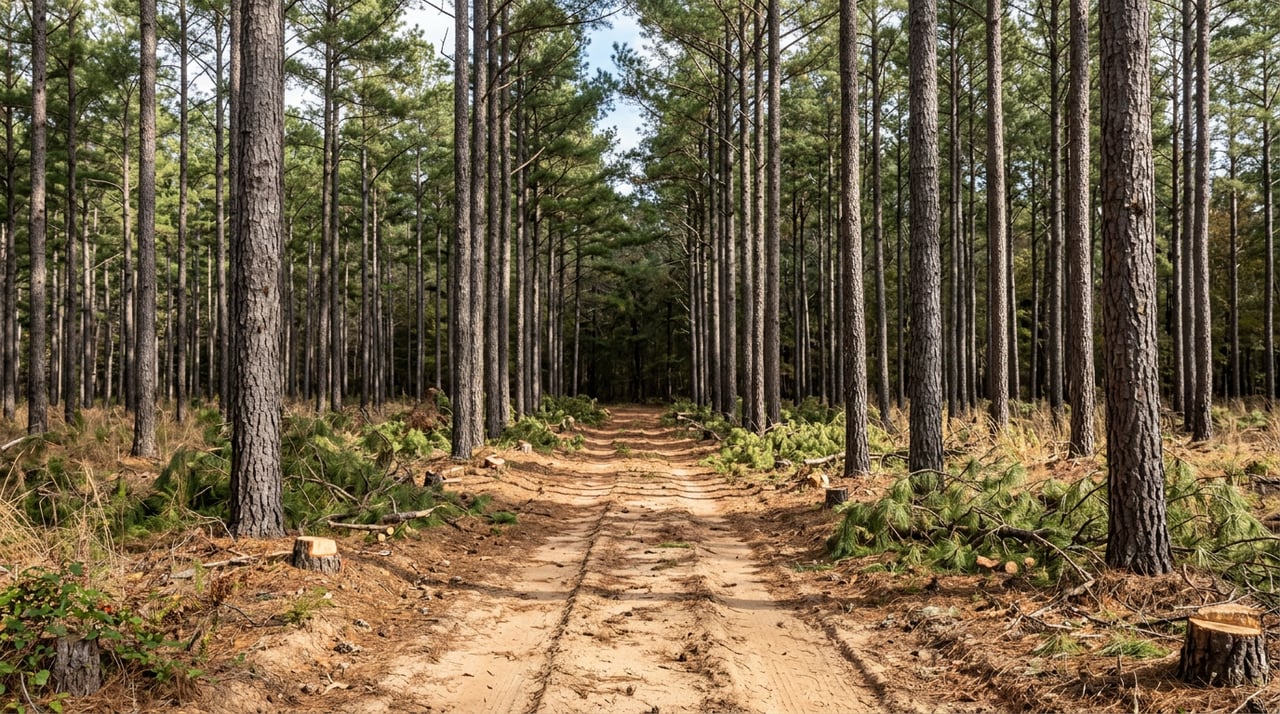
For planted loblolly pine, a common schedule is straightforward. Many stands take a first commercial thinning around age 13 to 15, a second thinning about 6 to 8 years later, and a final harvest in the early 30s. Site index, stocking, and markets matter, so confirm timing with a forester. The GFC’s stand-management guidance outlines these norms and supports plan-making. Review the GFC DMSF forest management guidance.
Aim for residual basal area targets that fit your goals. A timber-first approach often keeps about 60 to 80 square feet per acre after a commercial thin. If wildlife viewing and open aesthetics matter more, some landowners use lower targets around 40 to 50 square feet per acre.
Overstocked natural pine (often over 1,000 stems per acre) can benefit from a pre-commercial thin before age 10. Stands that have a live crown ratio below roughly one-third often respond poorly to thinning, so do not wait too long. A forester’s cruise will help you decide.
What you sell in early thinnings
A first thinning usually produces pulpwood and some chip-and-saw. A second thinning and the final harvest often yield a greater share of chip-and-saw and sawtimber. Do not assume national averages will match your results. Local mill demand sets the product mix and pricing.
Health, fire, and permits
Southern pine beetle (SPB) is a key pest in Georgia pines. Prevention practices like thinning, release, prescribed fire, and restoration planting can reduce risk. GFC supports this through the Southern Pine Beetle Prevention & Restoration program.
Prescribed burning is standard in southern pine to manage fuels, recycle nutrients, and support wildlife. In Georgia you need a burn plan and a permit, and there are seasonal burn rules. GFC provides certification, planning support, and the permit system. Learn more at GFC’s prescribed burning page.
When you build roads, install landings, or do site prep, protect streams and soils. Follow Georgia’s Best Management Practices for Forestry for water quality and erosion control.
Replanting and conversion options
If you are replanting after harvest or converting a stand, pick species that match your goals and site.
- Loblolly pine. The most common commercial choice for the Piedmont, with fast establishment and mid-length rotations.
- Longleaf pine. Suited to frequent fire and some wildlife objectives. Slower early growth and different site prep, often with longer rotations.
- Hardwoods (oaks and hickories). Chosen for mast and aesthetics, with longer rotation windows and less-intensive regimes.
Common site-prep tools include targeted herbicide, prescribed burning, and on some sites, mechanical work. Many owners combine herbicide and burning for a cost-effective reset. Planting can be by hand or machine. A recent survey of Georgia foresters reported these median costs as helpful benchmarks for a hypothetical 100-acre pine stand: machine planting about 90 dollars per acre, hand planting about 65 dollars per acre, mechanical site prep about 210 dollars per acre, prescribed burning for site prep about 20 dollars per acre, herbaceous weed control about 40 dollars per acre, and woody control about 60 dollars per acre. See the cost medians in this peer-reviewed survey. Actual quotes will vary by access, soils, and tract size.
Programs to stretch your budget
Georgia landowners often use federal and state cost-share for reforestation, thinning, and prescribed fire. Common options include NRCS EQIP, FSA CRP (where applicable), and GFC’s SPB prevention and restoration program. EQIP sometimes has targeted longleaf initiatives that can increase match rates in priority areas. Funding windows, practices, and eligibility vary, so confirm details before you bid work. The survey above outlines typical programs and how landowners use them in Georgia; start your planning with the cost-share overview in the survey.
Selling timber the right way
A registered consulting forester is your best ally for a fair, clean harvest. They prepare a management plan, cruise and value timber, design and run the sale, supervise operations, and help with programs and taxes. How to hire and vet a forester is covered by extension services. Review this guide on hiring a consulting forester. Surveyed Georgia foresters reported a median fee of about 1,100 dollars for a 100-acre management plan, and typical timber-sale fees around 10% of gross revenue for turnkey service and about 6% for sale supervision. Those are medians in the Georgia forester survey; confirm with local quotes.
Choose the right sale method
Two common sale types are per-ton (unit) sales and lump-sum sealed bids. A forester will match the method to your stand and market, then produce a prospectus and contract. Use a written sale contract and require references. The GFC’s checklist on Selling Your Timber explains sale methods and protections.
Add these protections in your contract:
- Proof of insurance and references for the buyer and logger.
- Compliance with Georgia BMPs for Forestry and county road rules.
- Streamside buffers, culvert and crossing specs, and debris cleanup.
- Defined landing locations, access routes, and a repair plan for ruts and gates.
- Verification of Master Timber Harvester training for the logging crew (where applicable).
Taxes and compliance
Georgia offers current-use property tax programs for qualifying ag and forest land, such as CUVA and the Forest Land Protection Act for larger tracts. Covenant terms, acreage minimums, and penalties vary by county. Standing timber itself is not taxed annually while it grows. Taxes apply when timber is sold or harvested. For rules and enrollment, consult your county assessor and the Georgia Department of Revenue’s property tax valuation guidance. Many programs require a written management plan, so keep your documentation in order.
Quick start checklist for Taliaferro tracts
- Verify title and boundaries. Clear ownership avoids surprises later.
- Call your GFC county forester. Ask about stand condition, SPB risk, burn permits, and cost-share windows.
- Hire a consulting forester for a cruise and plan. Use the plan to set thinning timing and budgets.
- Fix access first. Mark lines, repair gates, and plan BMP-compliant roads and landings before logging.
- Thin on time. Do not wait until crown ratios drop too low to respond.
- If replanting, price site prep and planting early. Check cost-share eligibility before you sign contracts.
- When selling timber, use a sealed-bid lump sum or per-ton sale with a written contract, and have your forester administer it.
Ready to buy or sell a timber tract, or want a property packet with maps, access notes, and local forester introductions? Reach out to Georgia Land Brokerage. Our land-first process, due diligence support, and county relationships help you move from questions to confident decisions.
FAQs
When should I thin loblolly pine in Taliaferro County?
- Many planted loblolly stands are ready for a first commercial thinning around 13 to 15 years, with site quality and stocking guiding the exact timing. A forester’s cruise will confirm.
What products come from a first thinning in Georgia?
- Early thinnings usually produce pulpwood and some chip-and-saw. Later thinnings and final harvests often yield more chip-and-saw and sawtimber, depending on local mills.
How much does replanting a pine stand cost per acre?
- Survey medians in Georgia show hand planting around 65 dollars per acre and machine planting around 90 dollars per acre, plus site prep and weed control that vary by site.
Do I need a permit for a prescribed burn?
- Yes. Georgia requires a burn plan and a permit, and there are seasonal rules. GFC offers certification and support to plan and conduct safe, legal burns.
How are timber sales taxed in Georgia?
- Standing timber is typically taxed when harvested or sold, not while it is growing. Check details with your county assessor and the Georgia Department of Revenue.
Should I hire a consulting forester to sell timber?
- Yes. A forester can cruise and value your timber, design and run the sale, supervise logging, and help with cost-share and tax documentation, often improving net returns.